
September 1944: Beginning of the fighting for the liberation of Alsace-Moselle
American troops were the first to enter Alsace-Moselle, a territory annexed to the Reich since the summer of 1940. Their army entered Moselle through the town of Gorze on September 6, 1944. The 11th Infantry Regiment, part of the 5th US Infantry Division, also liberated Dornot and its inhabitants that same day. The fighting there was very fierce and extremely deadly.
The 2nd Armored Division and the Allied advance in France
In the summer of 1944, France was traversed by two major Allied army groups, advancing along two distinct axes. Composed of American, British, Canadian, and French troops, the first group advanced from west to east after a difficult start. Le Mans was liberated on August 8, followed by Chartres on August 16, Orléans on August 17, and Paris on August 25. This advance was led by iconic figures such as Bradley, Montgomery, Patton, Dempsey, Hodges, and Leclerc.
The 2nd Armored Division (2nd DB), commanded by General Leclerc, landed in Normandy on August 1, 1944, and played an active role in the fighting for the liberation of the region. Integrated into the U.S. Third Army led by General Patton, it contributed to the Allied advance while heading towards Paris. With Eisenhower's approval, its tanks entered the capital, which was liberated on August 25, marking a decisive turning point in the reconquest of France.
Meanwhile, a second army group landed in Provence on August 15, under the command of General de Lattre. Advancing rapidly from south to north, this force liberated Lyon on September 3, Dijon on September 11, and Langres on September 14, opening the way to Alsace.
Eastern France: Still under Nazi occupation
The war was far from over, however, and large swathes of territory remained under enemy control. While the Germans were defeated in the West, the East was still under Nazi domination. Emboldened by their success, Leclerc and his armored divisions advanced towards Alsace. Strasbourg was recaptured by the French three months later, on November 23, after fierce fighting to cross the Vosges Mountains and break through the last German defenses.
The liberation of the Villé Valley
On November 24, Pierre Schramm, mayor of Urbeis, who was present at La Hingrie that day, reported: American troops were at the Urbeis and Fouchy passes. That evening, at 6:00 PM, a battalion descended from the pass, liberating the upper part of the village of Urbeis. The Americans stopped for the night; the next day, November 25, Urbeis was completely liberated, and the troops continued their advance to Fouchy. They then joined the other battalions, who had descended from the Fouchy Pass via Noirceux and had liberated Fouchy that same day.
In Breitenau, the Americans also arrived via the mountains. A battalion descended from Rougerain towards the village on November 26th around 10:00 AM. There, only a few German soldiers were present, busy laying mines on the other side of the stream, in the commune of Neuve-Église. Raymond Tonnelier, mayor of Breitenau, reported that the German soldiers shot their commander before surrendering to the Americans. The following day, tanks and more American soldiers arrived in the village from Villé.
Villé was liberated on November 26, 1944. On November 20, Senones was liberated, followed by Saales on November 22, then by Saint-Blaise and Steige on November 25.
Other villages, such as Albé, Triembach, Hohwarth, Saint-Maurice, Thanvillé and Dambach, quickly fell when the American 103rd Infantry Division launched its full force against the German defenses.
Meeting with Mr. Humbert, President of Alsace Mémoire 39-45
I had the opportunity to speak with Mr. Humbert, President of the Alsace Mémoire 39-45 association, to learn more about the key events of the liberation of the Villé Valley in 1944 and the preparations for the 80th anniversary commemorations, which will take place on Saturday, November 23rd and Sunday, November 24th in Saint-Martin, Maisonsgoutte, and Steige. Here is what Mr. Humbert told me:
Key events of the liberation
One of the most significant events of this period was the bombing of Maisonsgoutte on November 27, 1944. This dramatic event will be central to one of the commemorative ceremonies. The liberation of the valley took place over three days, carried out by three regiments of the 103rd US Division, also known as the Cactus Division.
Testimonies and anecdotes
Numerous testimonies and anecdotes have been collected, but it is difficult to summarize them here. These often poignant stories will be shared during the exhibition, allowing visitors to delve into the heart of local history.
The challenges faced by residents during the occupation
During the occupation, the inhabitants faced many challenges, including forced change of nationality, restrictions on movement, food rationing, the impossibility of moving about at night, as well as forced conscription into the German army and compulsory labor.
An immersive exhibition
The event includes a 400 m² indoor exhibition and a 2,000 m² outdoor exhibition:
Indoor exhibition:
A reconstruction of daily life during the war: scenes of exodus, school, rationed meals and bombings.
A 50 m² cinema room for the screening of films, documentaries and testimonies.
An 80 m² exhibition on the role of women during the war, with 14 mannequins in period costumes.
A presentation of 200 American archive photos, accompanied by period material.
Outdoor display:
A giant encampment recreating the main belligerents of the war, as well as civilians from the 1940s.
Historic vehicles and equipment.
Transmission and memory
For Mr. Humbert, the main objective of this commemoration is to pass on history to younger generations. As he reminds us: "Those who forget the past are condemned to repeat it."
A collective project
The success of this event rests on a collective commitment, bringing together associations, local authorities, businesses, and residents of the valley. Many stakeholders contributed to making this commemoration a unifying project. Among them were the Maisonsgoutte football club, the Maisonsgoutte and Saint-Martin fire departments, the Maisonsgoutte Twirling Baton and Honel Band groups, and Les Étoilés de Steige. The three town halls of Maisonsgoutte, Saint-Martin, and Steige, the Villé secondary school, the inter-municipal association (SIVU), members of the school and after-school program, the Villé media library, the youth center (MJC), the Crédit Mutuel bank, and the inter-municipal council (COMCOM) were also key partners.
Many volunteers, young and old, also played a vital role in the preparation and implementation of this event.
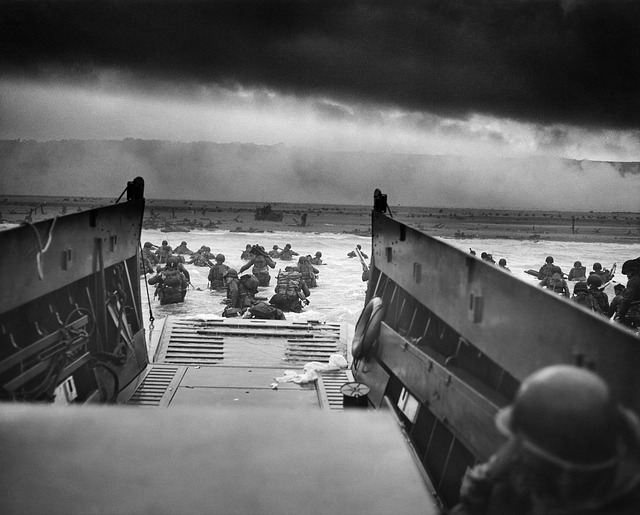
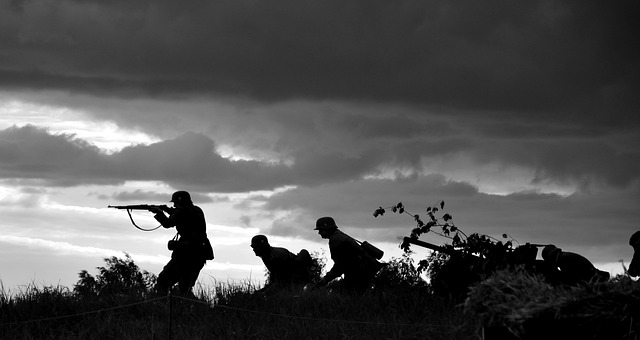
Come celebrate the 80th anniversary of the liberation of the Villé Valley on the weekend of November 23rd and 24th, 2024! Here is the program:
Saturday, November 23
- 10:00 : Opening of the camp and the exhibition, with light refreshments and vehicle rides.
- 17:00 : Camp closed.
- 18:30 Night parade of vehicles to the ball in Steige (2 km).
- 19:00 Ball and meal in Steige.
Sunday, November 24
- 10:00 : Departure of the convoy for Steige, followed by a parade in Saint-Martin (8 km).
- 10:45 Ceremony at the Saint-Martin war memorial.
- 12:00 : Reception at Saint-Martin.
- 13:00 : Return to camp, with light refreshments and a visit to the exhibition in the afternoon.
- 16:30 : End of event.
A weekend of remembrance, sharing, and conviviality. Don't miss this unique event!