
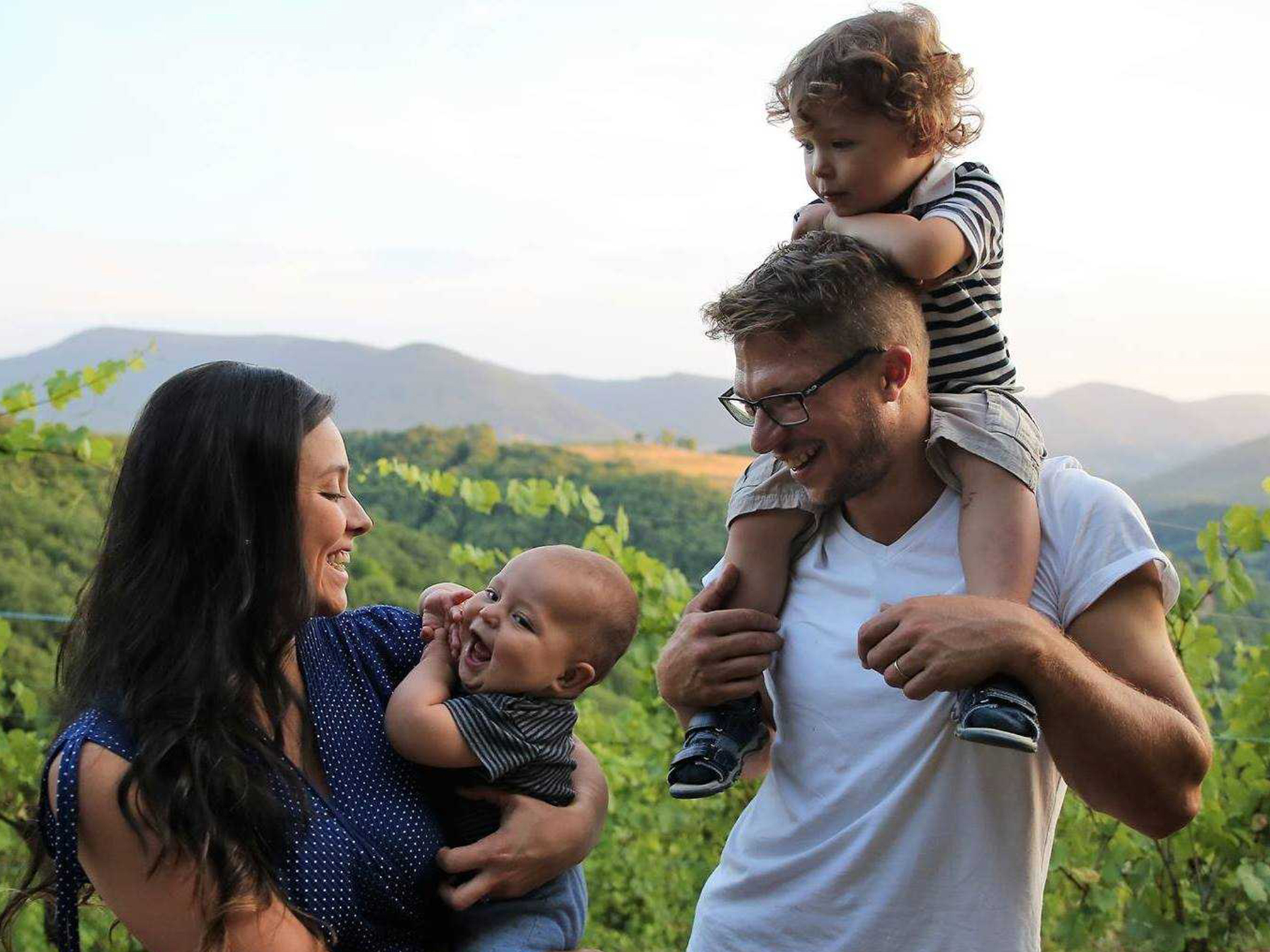
We continue our series of articles "come, I'll take you" and take you to meet Angela and Ghislain, winegrowers in love and at the head of a brand new estate, Maison Moritz Prado.
Angela Prado and Ghislain Moritz are to wine what Serge Gainsbourg and Jane Birkin are to song, what Victoria and David Beckham are to football, what Michelle and Barack Obama are to the presidency, what Pierre and Marie Curie are to medicine…in short…they love each other and work together to offer the very best.
This young couple embarked two years ago on a very ambitious adventure, having founded a wine estate.
Starting from scratch, the venture was daring but seems to be working… and even quite well.
Let's go together to meet the most cosmopolitan winemaking couple in our valley and ask them a few questions to learn all about their project, their vision of wine and their results.
"It's a huge privilege to do what you love. Even if it's far from easy, it's a lifestyle choice."
Hello Angela, hello Ghislain!
Can you introduce yourselves one by one and tell us a little about your stories and professional backgrounds?
I know that Ghislain's background is quite varied in terms of experiences in foreign countries, but I don't have much information about Angela's background other than that you were with Ghislain in Romania.
Can you tell us about yourself?
Yes, of course, and thank you for your interest in our project.
I (Ghislain) am from Alsace, but not from the winemaking side; I'm from Reichshoffen. I don't come from a winemaking family, but after traveling in Australia and New Zealand, where I fell in love with agriculture, I returned to France to study viticulture and oenology in Burgundy. After five years of experience there, I was still looking to discover my own path.
In 2009 I went to Portugal to do the grape harvest and to explore other terroirs.
Meanwhile, I was fortunate enough to find an extraordinary opportunity: to become the cellar master of a new estate in Romania at the age of 25. Without a second thought, I moved to the foothills of the Carpathians to make my first wines.
My name is Angela, and I'm from Bogotá, Colombia. I left Colombia in 2008 to study Finance in Rennes. After two years in Paris working in the corporate world, I met Ghislain, but he already had plans to move to Romania. I fell in love with him, and I preferred to go to the heart of Romania rather than stay in Paris, the city of love, without my sweetheart.
The owners of the Romanian vineyard decided to hire me to handle business development, marketing, exports, and wine tourism. In the meantime, I furthered my skills with a Master's degree in International Wine and Spirits Trade from the Dijon Business School.
This opportunity was incredible because it allowed us to learn the trade (at least for me, Angela) but also to learn to work together and to envision what we wanted to do once we had our own domain.
In 2017, we decided to return to France, to Alsace, to create and work on our own adventure, Maison Moritz Prado.
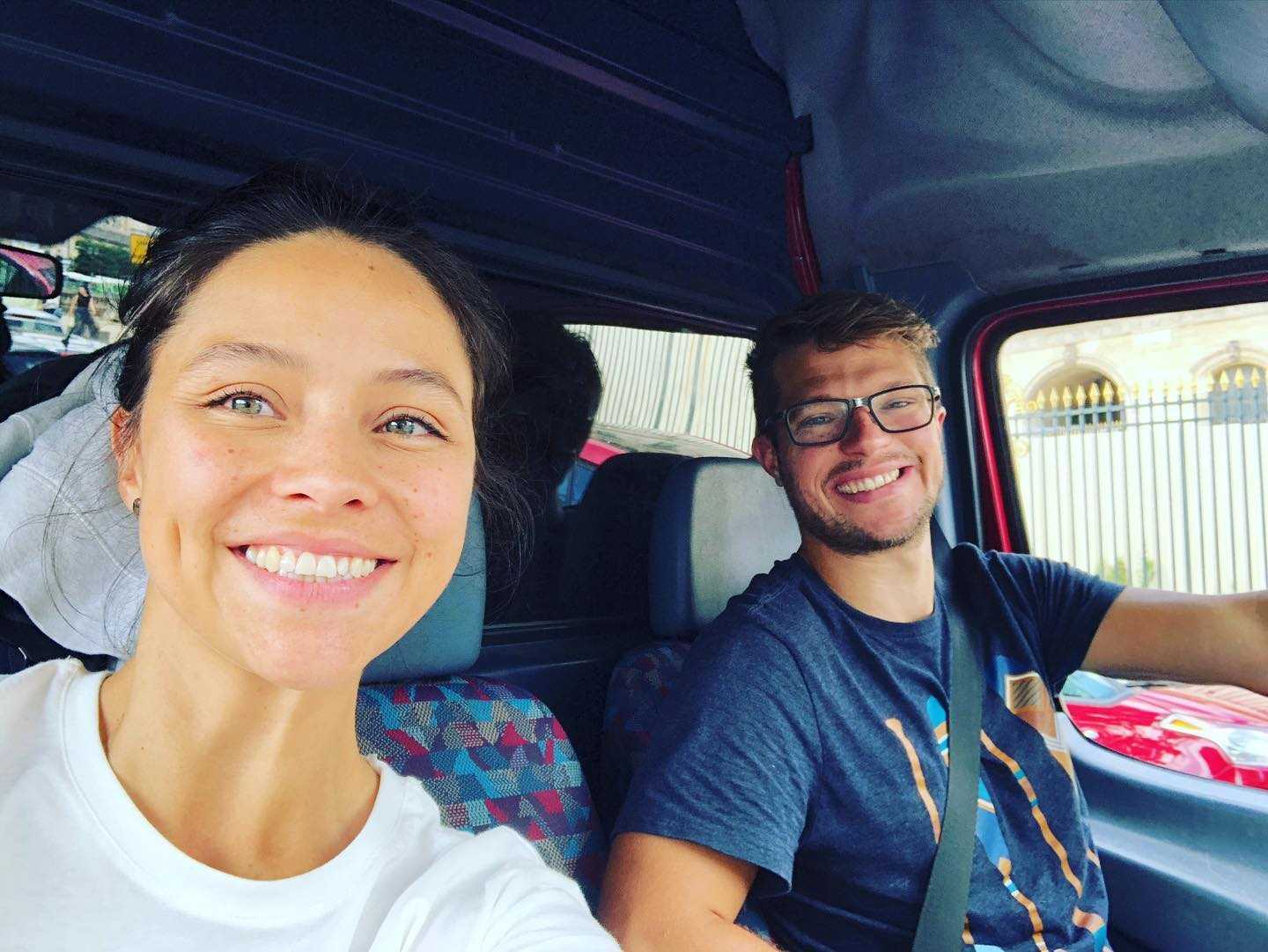
You are now the owners of a vineyard in the village of Albé.
Neither of you comes from a winemaking family. You are the first generation to give your names to a wine estate.
How did you develop a taste for this profession and why did you choose to found your own estate?
Wine is not just another product. It revolves around agriculture, but it goes far beyond that. It's a lifestyle, it's a taste for nature, it's hard work, it's about the art of living.
It's a huge privilege to do what you love. Even if it's far from easy, it's a lifestyle choice.
Making our own wines was the only option for us.
What were the main difficulties you encountered during the creation of the Moritz-Prado estate?
Creating our estate from scratch—finding vineyards, a suitable location, and equipment—presented us with numerous financial challenges. Convincing banks isn't always easy, especially these days… But thanks to a well-structured project, combined with our experience and expertise, we succeeded in persuading them!
So you have bought 3 hectares of vineyards and have another 2 hectares under lease.
How did the purchase of these plots come about? Was it an opportunity that led to it, or did you absolutely want to have a vineyard in Albé, and for what reasons?
We wanted to return to Alsace; that was our only requirement. After exploring other opportunities to take over a vineyard, which ultimately fell through, we met Gilbert Beck of Domaine de Rempart, who managed these 5 hectares in the only mountain vineyard in Alsace. He was captivated by our enthusiasm and experience, and I believe that's why he prioritized our project, ensuring that all his vines remained on the same estate, instead of being sold off piecemeal.
And then we fell in love with Albé; it's a hidden gem of a vineyard. Being in a mountain vineyard has its advantages and disadvantages, but we want to focus on its strengths and make the most of them. Its freshness, its rare schist terroir, its potential with these Pinot Noirs, its wild landscapes—it's this combination that made us fall in love with our vineyard.
You are a wine estate, how do you divide the tasks?
Do you both work together or do you each have a designated area of expertise?
Angela, what is your role within the field?
And you, Ghislain, what tasks are you responsible for?
In today's wine industry, you have to be versatile to succeed. We firmly believe this.
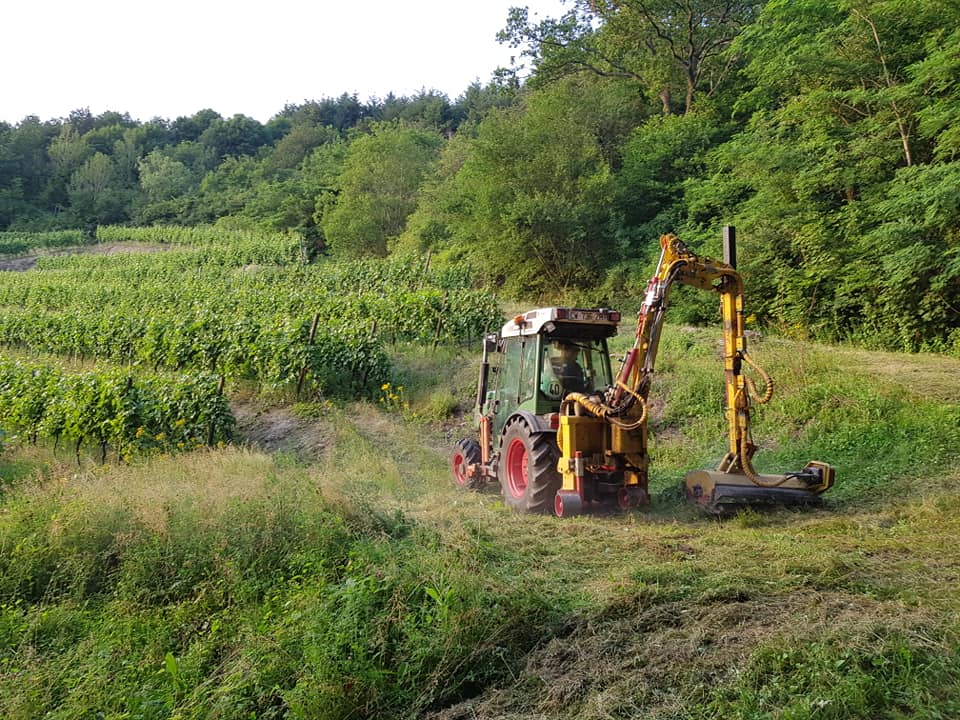
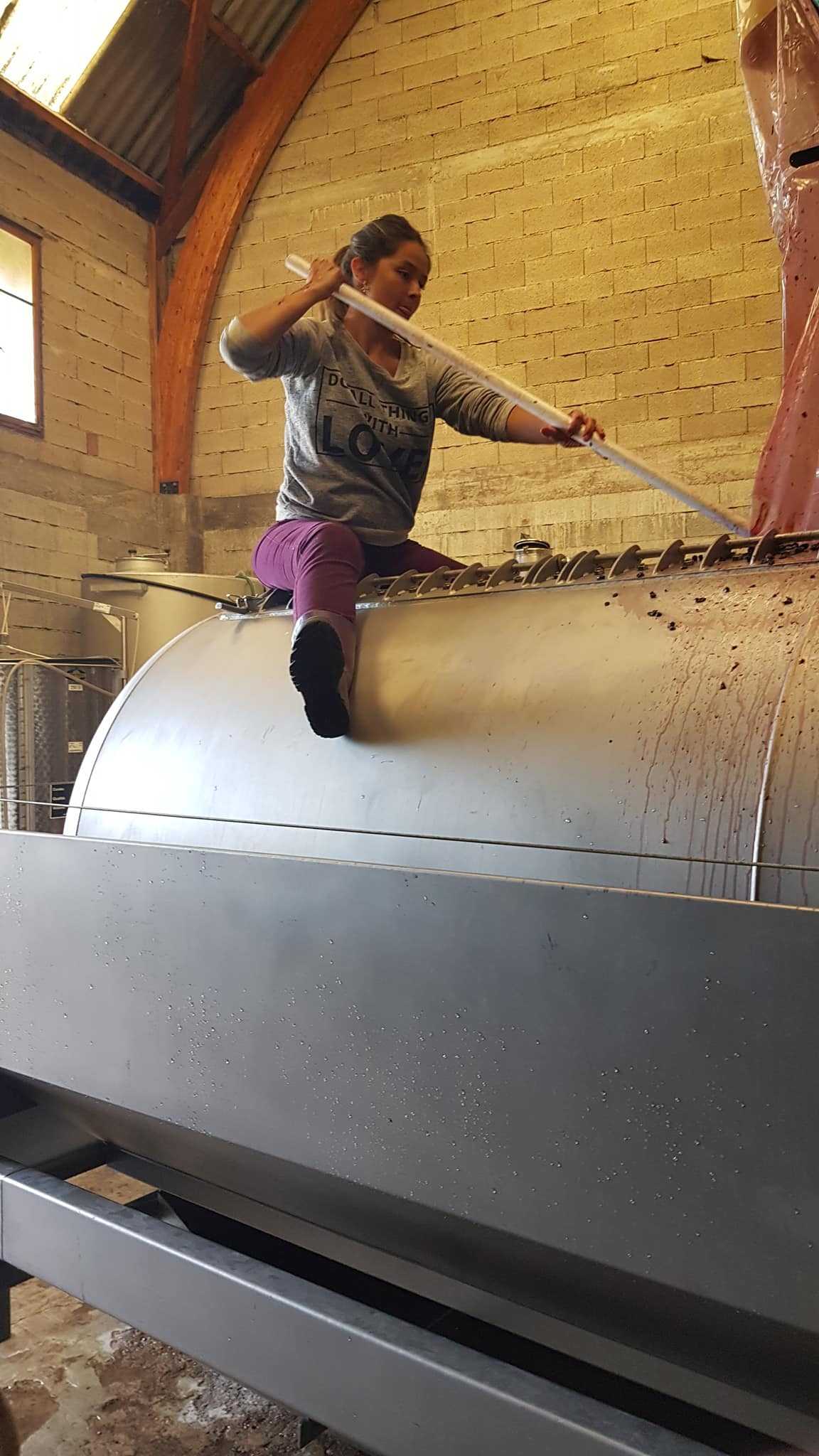
In the vineyards, there are two of us handling tasks that don't involve the tractor: pruning, logging, training, trellising, etc. Ghislain is the tractor driver.
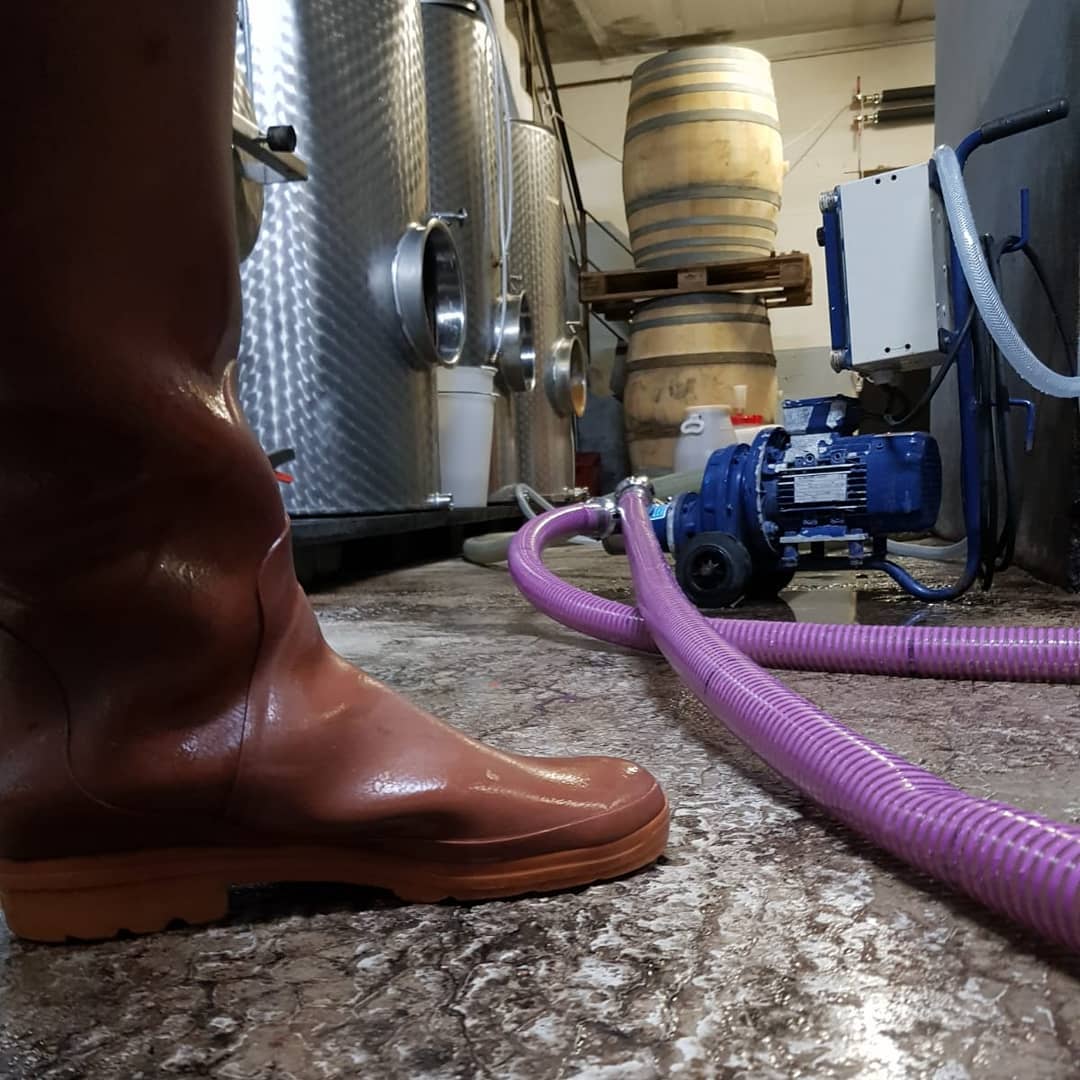
In the cellar, we each have our say, and since we are in sync with our tastes, it's easy! But Ghislain remains the official cellar master.
In the administrative part, I am rather autonomous (Angela).
We love sharing our wine, so the business side of things is a joint effort, although I (Angela) am the one who enjoys traveling around Paris and other French cities more, presenting and selling our wines.
This year, the grape harvest in Alsace started 10 days earlier than in 2019. Were the grapes also ahead of schedule at Domaine Moritz-Prado, and did you start harvesting as early?
We harvest when the grapes are ripe. This means we decide when the grapes will be harvested for our wines and are not subject to any external pressure. We are not grape suppliers.
We started making our crémants on September 12th. Even though Alsace started early, being in the mountains means we have about ten days' difference between the plains and us.
We don't have too much perspective, but since we started harvesting our vines (2018) the dates vary by about ten days, around mid-September.
What tasting sensations are you trying to convey in your wines?
What are you working on and what result are you looking for?
Drinking wine is a moment of sharing, of enjoying life.
Taste preferences are very personal; each of us has a repertoire of tastes and flavors rooted in our childhoods and memories. For me, Angela, a quince is exotic, while passion fruit or mango are fruits I grew up with.
We aim to share the pleasure of our well-made wines. The experience is very personal. But we still want everyone to recognize our expertise and attention to detail. The expression of the terroir is very important to us.
Your wines are organic!
Why did you choose organic farming and, more generally, how do you work your soils and vines?
We are in our second year of retraining, so we don't have the label yet, it will come.
For us, vineyard work must be done with respect; not only for our vines, but also for the environment, for biodiversity, and of course for ourselves.
For us there was no other option than to work our vines organically, and even beyond that, this year we also started biodynamic agriculture.
We are the ones most directly affected and the first to come into contact with the products we use in our vineyards; we walk around the vineyards with our children. That means everything to us, and organic and biodynamic farming is essential.
We're going even further by planting cover crops between our rows of vines. It's an assortment of seeds that we plant after the harvest to improve soil structure; these seeds will promote life and biodiversity. We're also taking this approach to maximize carbon sequestration thanks to this biomass: everyone must make an effort to limit global warming!
Are you talking about natural wine or sulfite-free wine?
We want to be a conduit for our vines, our terroir, and our wines. Wine is made 80% in the vineyards, if not more. Once in the cellar, we simply assist the process; with hygiene and respectful winemaking practices, and without chemical additives, so that our grapes become superb wines.
Here, there is no exogenous yeast, which means that fermentation will take place spontaneously with indigenous yeasts from the cellar and the vineyard.
Sulfites are protective, and so for some of our wines we add a little at bottling, we have a range of wines called Nous Sommes (un vin) Libres, for which there is no addition of sulfites at any time, no filtration.
For us, it's a question of balance.
One last little question!
If you could only keep one of your wines, which would it be and why?
Impossible! It's like choosing one of our sons…
But if necessary, I (Angela) would go for our Nous Sommes Libres – Blanc. It's a blend of our oldest vines (planted in 1960) of Riesling and Sylvaner. This wine was aged entirely in amphorae, with skin maceration for the Sylvaner. A real treat and a wine that evolves with every sip; it's lively and vibrant, this wine never disappoints.
For me (Ghislain), our Pinot Noir – Clos du Sonnenbach 2018, because our Pinot Noirs, grown on our beautiful schist terroir, have a real personality. 50% of this wine was aged in Burgundy oak barrels, 10% in amphorae, and 40% in stainless steel. It's a blend that gives us a Pinot Noir that is full-bodied, generous, and silky. The future of Alsace is Pinot Noir!
Angela, Ghislain, we thank you for the time you have given us.
Good luck with the grape harvest and best of luck with the rest of your wonderful project.