You are here > Home > News > Christmas trees but no Christmas
Christmas trees, but no Christmas.
Christmas is approaching, it seems. With this holiday, many families will be looking for one of the essential elements to share this moment: The Christmas tree!
In general, our Christmas trees are Norman firs or sometimes spruces.
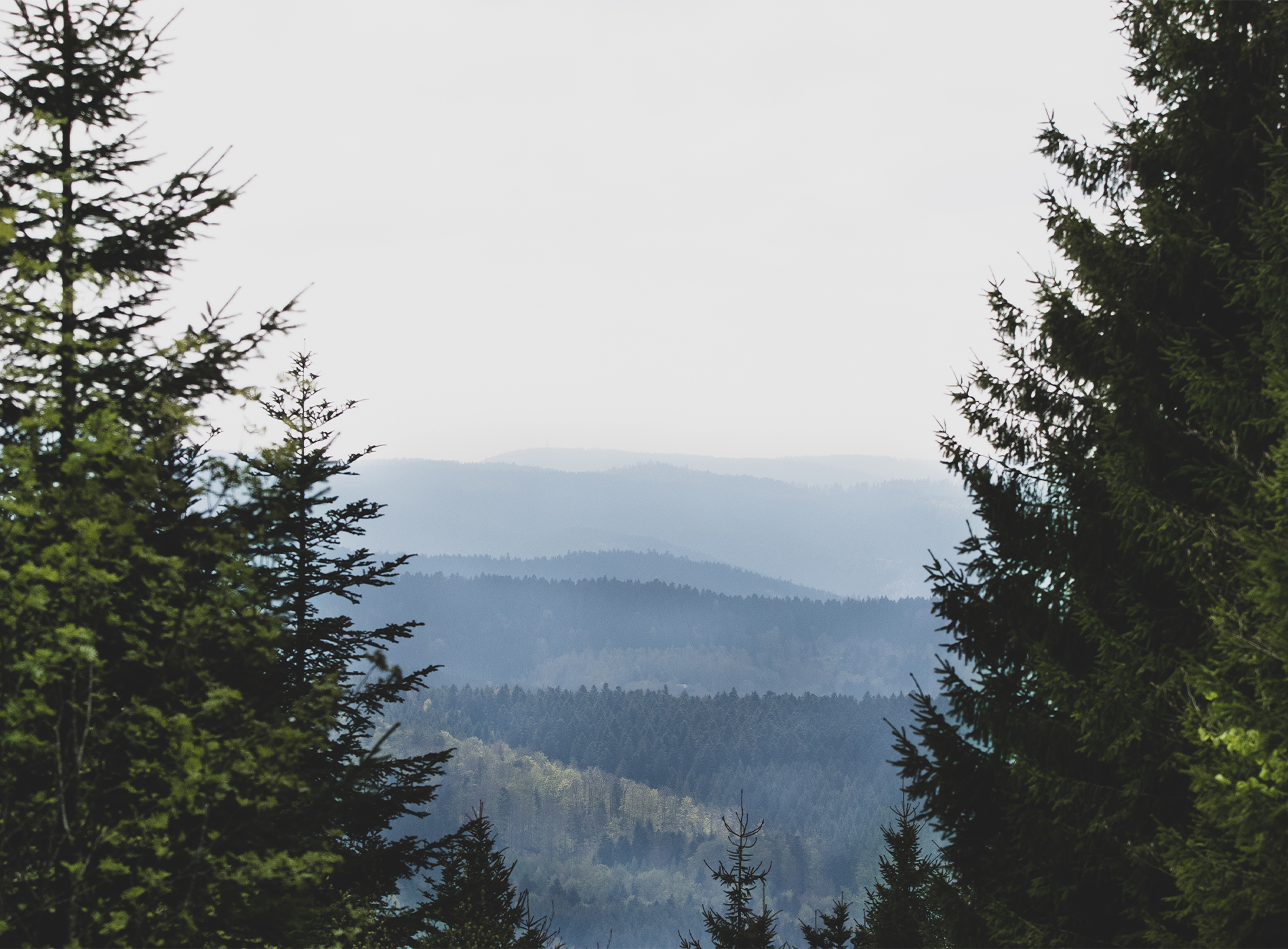
As you know, it's no longer a secret, at the Tourist Office, our biggest flaw... which is our greatest strength, is curiosity. So we wondered what types of coniferous trees grow in our valley?
As with many topics concerning the forest, we asked Olivier Seyller, who works for the ONF, to guide us in our research. He therefore provided us with the following list, specifying that the percentage of individuals per species changed depending on the plots.
In the Villé Valley we therefore find:
-Silver firs -Scots pine -Black pines -Pines Laricio -Larches -Spruce trees -Atlas Cedars
We extended our research online to describe these 7 tree species for you.
The silver fir.
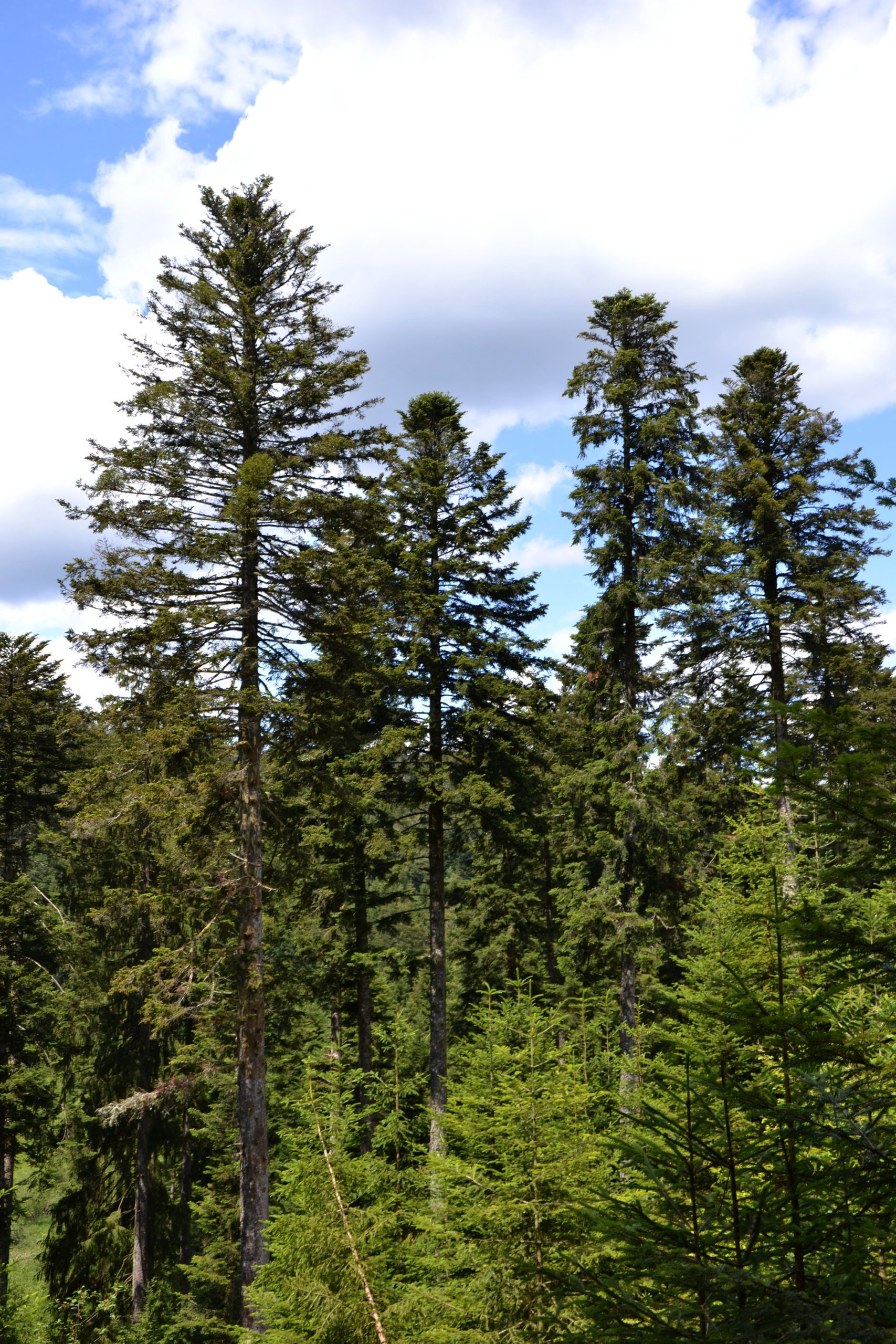
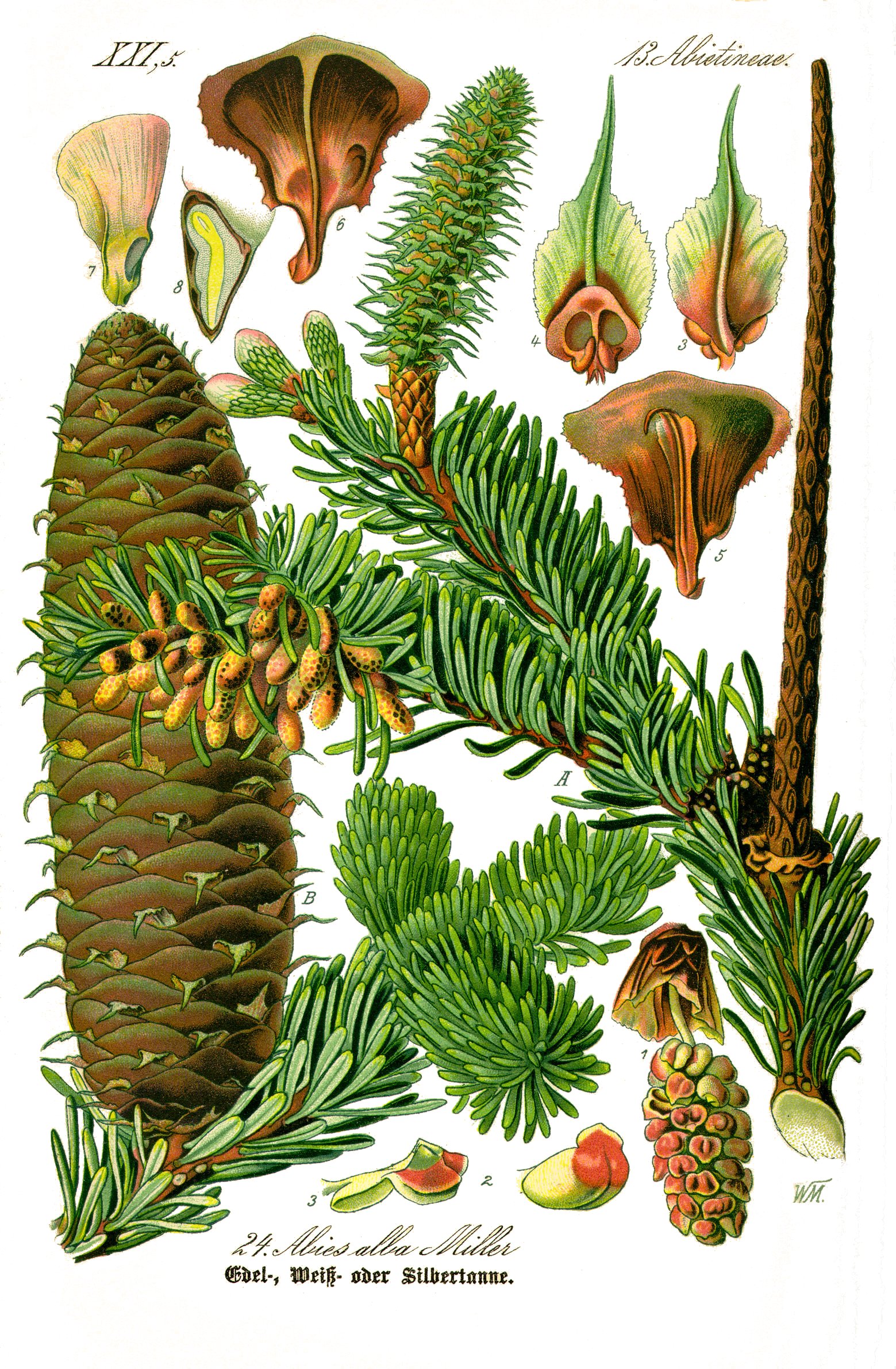
It can be called white fir, common fir, silver fir, or simply fir. In our region, it is commonly called Vosges fir. It is a conifer from the Pinaceae family.
It is the tallest tree in Europe. It can reach 60 meters in height and some have even been measured at 80 meters in height.
The silver fir can live up to 500 years and have a trunk diameter of up to 2 meters. In simple terms, this conifer can be described as having a crown that is initially conical, then pointed, then ovoid, and finally tabular (that is to say, spreading). Its trunk is straight and its branches are horizontal.
The buds are quite large, ovoid, smooth and chestnut brown in color. Its buds have been used to make various liqueurs: fir bud liqueur. In the Middle Ages, Cistercian monks succeeded in fermenting the buds and creating a beer called "La Berthom".
Scots Pine
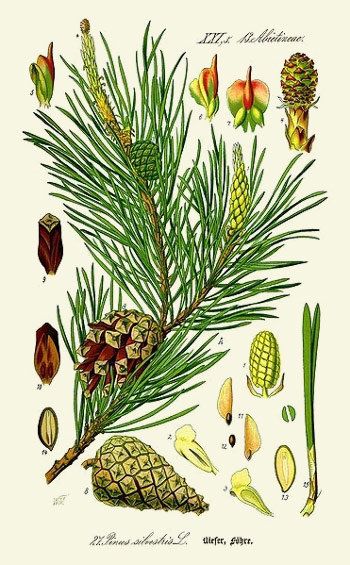
From its scientific name Pinus Sylvestris, this pine is a species of tree in the Pinaceae family native to central and northern Europe. It is a species with a wide ecological and climatic range, notably one of the most important in Eurasia.
It is a white tree with a long trunk. It can live between 150 and 200 years, but some studied specimens can live up to 600 years. It measures approximately 25 meters high.
Scots pine essential oil, which has energizing and hypertensive properties, is made from this pine tree. This oil has been recognized since Hippocrates and ancient Greece for treating respiratory ailments.
Through dry distillation, it yields essential oils that are widely used against baldness.
The Black Pine
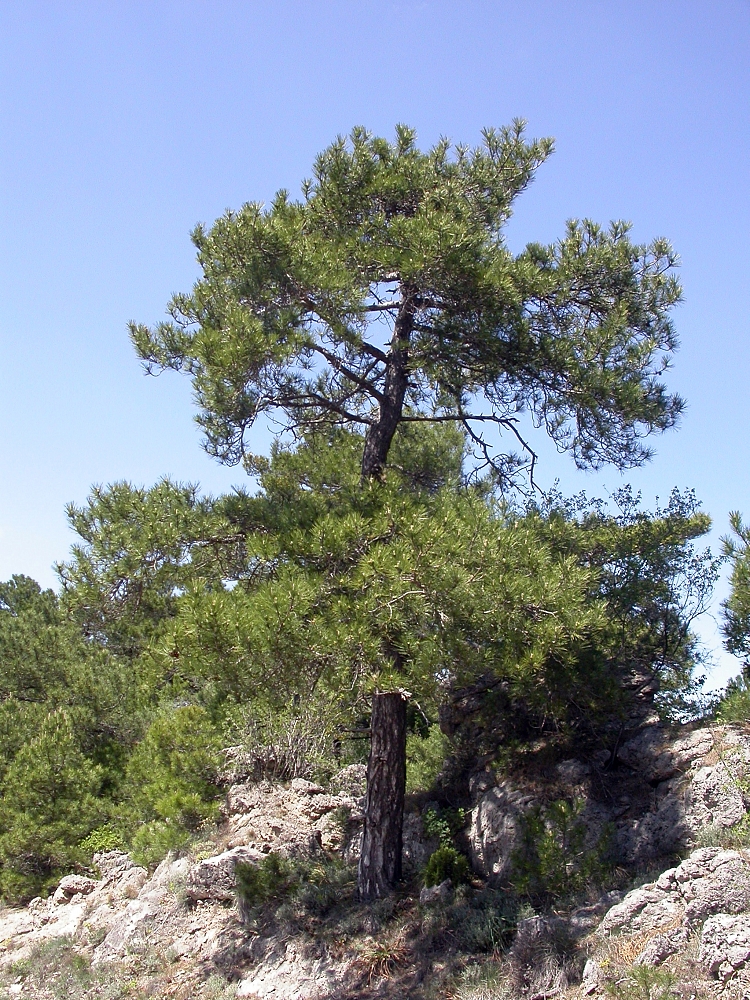
Pinus Nigra is a species of pine that has many varieties and can be found almost everywhere in southern Europe. It is being studied by INRA because it demonstrates a remarkable adaptation to drought and is therefore valued in the context of current global warming.
It is a large tree because it regularly reaches about fifty meters in height.
It is also used to produce essential oils which have respiratory, joint and muscular properties, asthenia relief and disinfection properties.
Le Laricio Pine
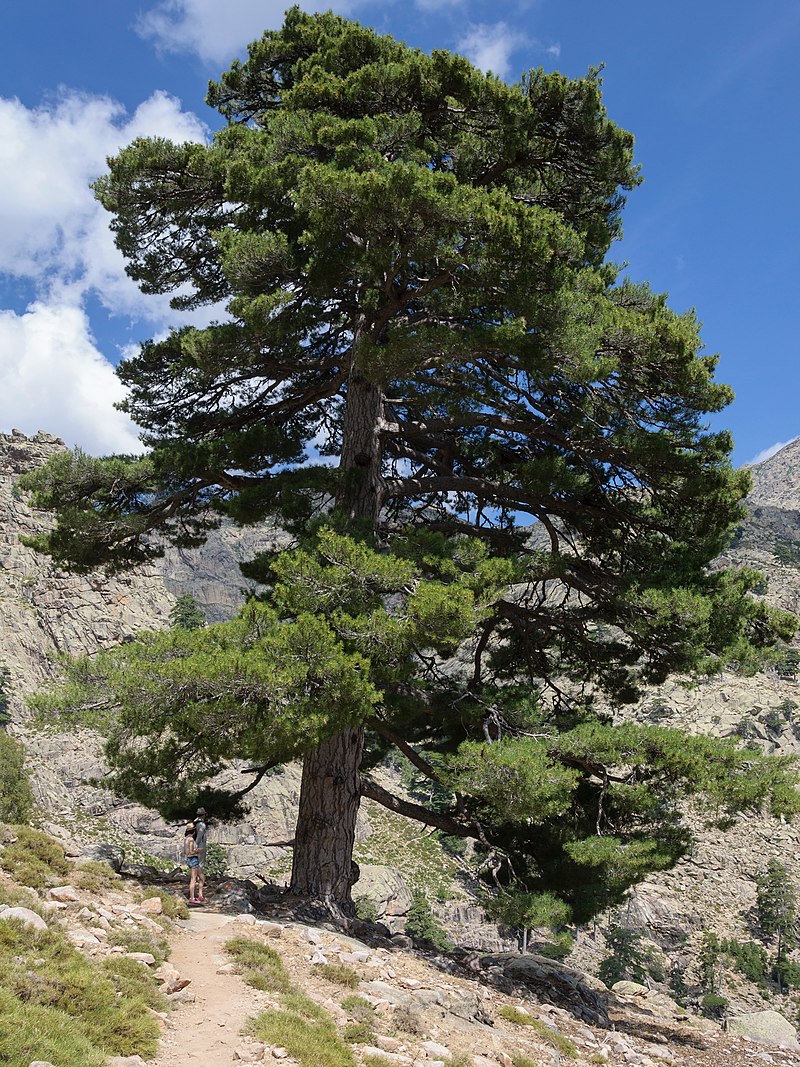
Also called Corsican Pine, the Lacirio pine is actually a subspecies of the Black Pine.
This species reaches a height of approximately 30 meters. The rest of its description is similar to that of the black pine.
The larch
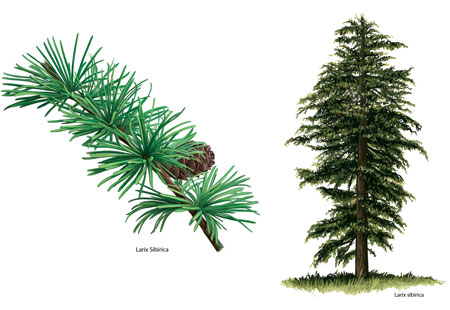
Standing at 40 meters tall, the larch encompasses various trees from the temperate regions of the northern hemisphere. These trees belong to the Pinaceae family.
One of the special features of this tree is that it loses its needles in autumn and winter. In autumn, like deciduous trees, it changes color and adorns itself with magnificent yellow and orange hues.
Highly valued in carpentry, larch can also be used to make larch liqueur, which is produced with its flowers. Larch essential oil is rich in terpenes and is known for its respiratory and stimulating properties.
The Spruce
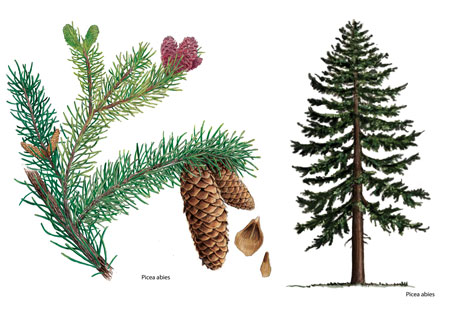
The common spruce, Picea amies, is a species of resinous tree in the family Pineaceae native to Europe. This species is adapted to cold and humid climates and is naturally found in lowland forests. In our region, it is found naturally in the mountains above 400 meters.
It can live for 500 years and generally reach a size of between 35 and 40 meters. In Eastern Europe, some specimens exceed 60 meters.
Depending on where it grows it is called “small fir”, “Northern Spruce”, “Norway Spruce”, “Weeping Pine” or even “Gentle Fir”.
A forest composed mainly of spruce trees is called a "spruce forest". In the Vosges mountains, a spruce plantation is called a "Hagis".
The Atlas Cedar
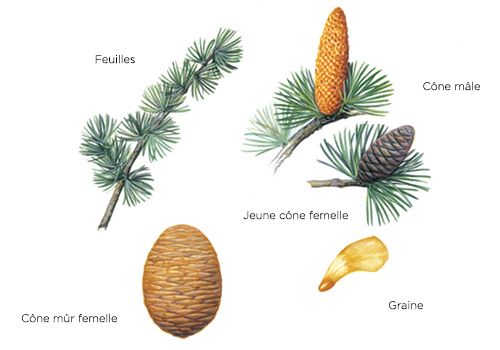
Cedruc Atlantica is a species of coniferous tree in the family Pinaceae. It originates from the Atlas Mountains and its natural range is in Morocco and Algeria.
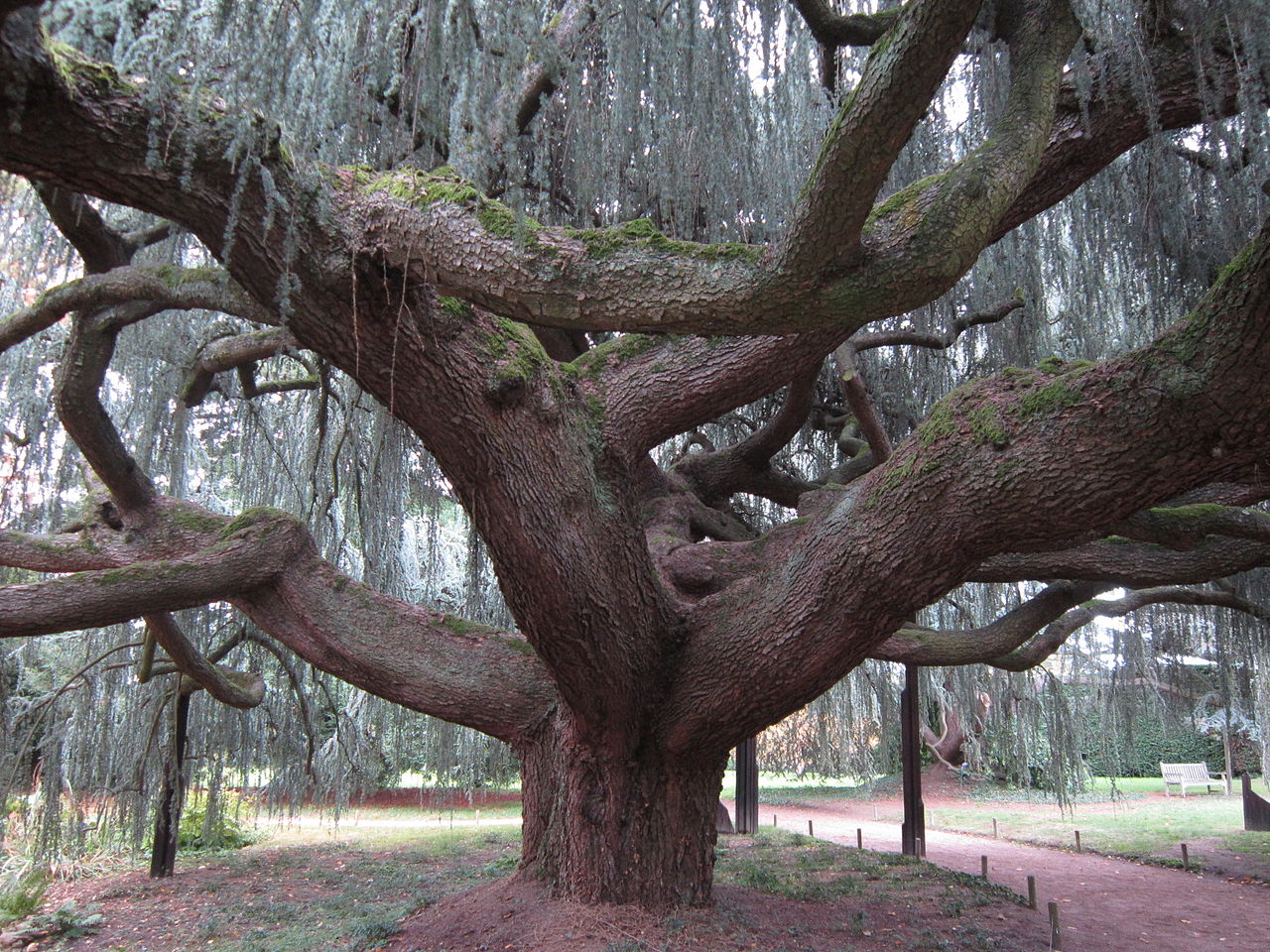
This majestic tree, which is planted in many parks, is considered endangered by the International Union for Conservation of Nature.
Reaching a height of 30 to 40 meters, this tree can live for 600 years but sometimes much longer in favorable conditions.
In ancient Egypt, its fragrant resin was used to embalm mummies.
Now you are experts on the types of conifers we find along our trails. We hope this article has provided you with new knowledge and that we will see you again for our next topic on the Tourist Office blog.