Drip houses
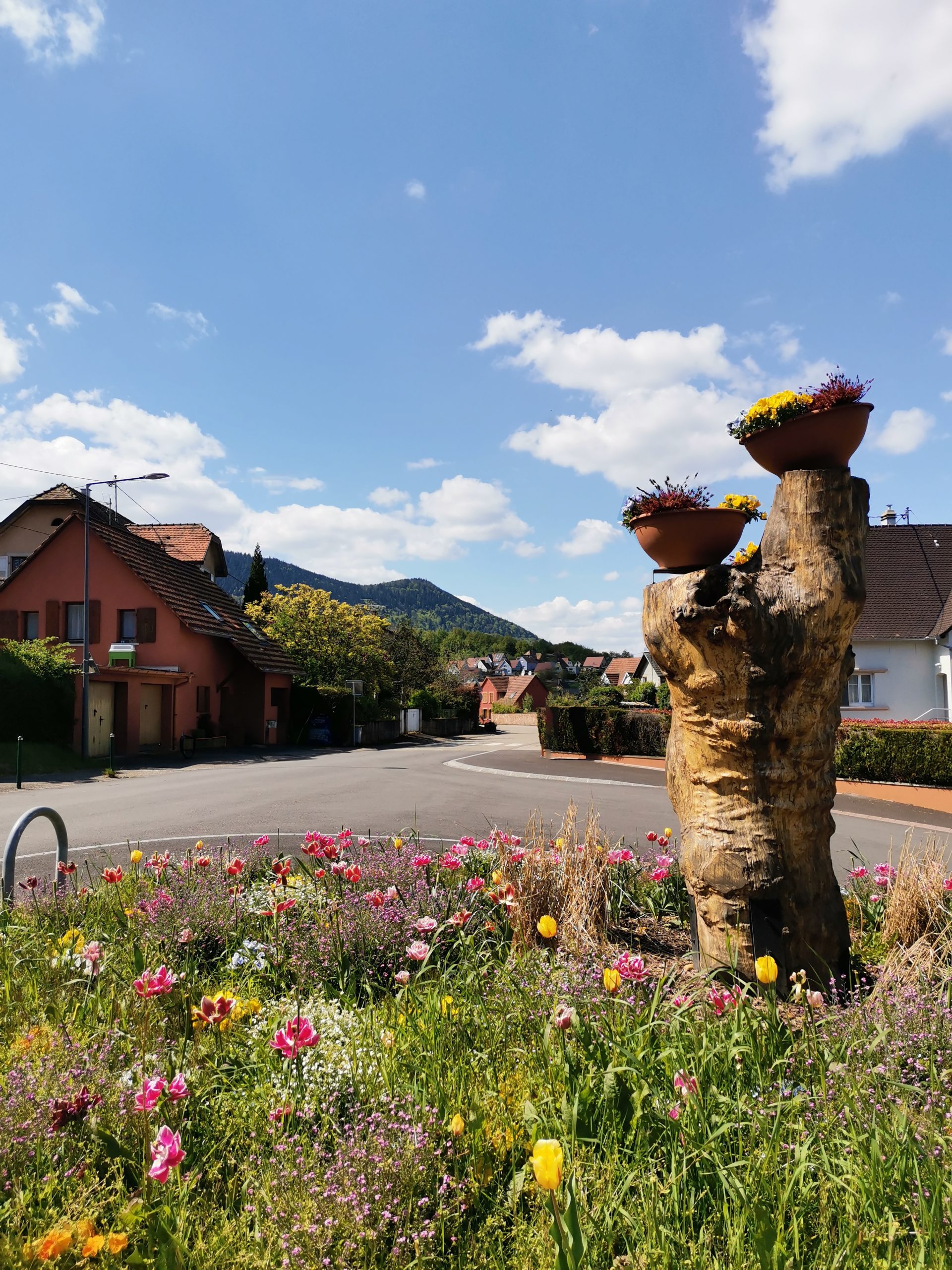
The history of the name Maisonsgoutte begins with the corruption of its original name, Hisselbach, in the 14th century. A literal translation of this name leads us to Maisongoutte, the suffix -goutte being widespread in Romance-speaking regions to designate a stream, particularly in the Villé valley. Subsequently, Maisonsgoutte, adapted and transcribed into German, naturally evolved into Maisengott in 1603, then into Meissengott in 1665.
The inhabitants and their nickname
The inhabitants' nickname, "the ants," reflects their love of work and nature, a value passed down through generations of the Meisegetters. The residents of Maisonsgoutte are also known by several other nicknames, such as Pfafferschlacker (pepper lickers), Omeise (ants), or Haxa (witches).
Neubois
Neubois, known as Gereuth in German and Kritt in Alsatian, is first mentioned in 1336. This Germanic place name then appears in various forms, such as Krût and Kritt, over the following decades. From the 17th century onwards, the name began to be Gallicized.
The German term Gereuth means "clearing" or "land clearing." It refers to a section of forest that has been cleared, where the branches have been burned. In this sense, the French translation of the name would be closer to "stirpoux" than to "neubois." Indeed, Neubois refers to these cleared areas which, after a few years of cultivation, revert to a state of wasteland or to a new forest that grows spontaneously.
The inhabitants and their nickname
The inhabitants of Neubois are nicknamed Krittersaeckle, which means "little plant bags".
New Church
Neuve-Église, known as Neukirch in German and Nejkerich in Alsatian, is first mentioned in 1336 as Nunkirch. Over the centuries, the spelling of the name underwent numerous changes: Nuwenkirch in documents from 1359, 1362, and 1369; Nüwenkirch in 1371; Nuwenkirche (1430); Nuwekirch in 1469; and Nükirch in 1543.
After the Treaties of Westphalia in 1648, a large part of Alsace was annexed to France. In the baptismal register from 1688 to 1717, the priest François Willette drew up a "list of all the families of the parish of Neuve-Église" in 1690. From the 18th century onwards, the spelling Neuve-Église was adopted, except during the periods of German annexation (1871-1918 and 1940-1944), when the name was again Germanized.
The village church is one of the oldest religious buildings in the valley, the lower part of the bell tower likely dating back to the 13th century. The use of the word "Neuve" (New) in the name raises questions: why is it called "Neuve Église" (New Church)? It is probable that this name was given in reference to an earlier church. This name could refer to the first church in the Comté-Ban region or be compared to other sanctuaries already established in the valley, such as those of Villé, Saint-Martin, Fouchy, and Saint-Maurice, all of which possess remains or written records of ancient places of worship.
The inhabitants and their nickname
The inhabitants of Neuve-Église are nicknamed d'Schnaka, meaning "the snails".
Hirtzelbach
The inhabitants of Hirtzelbach are called d'Katza (the cats).
Saint-Martin
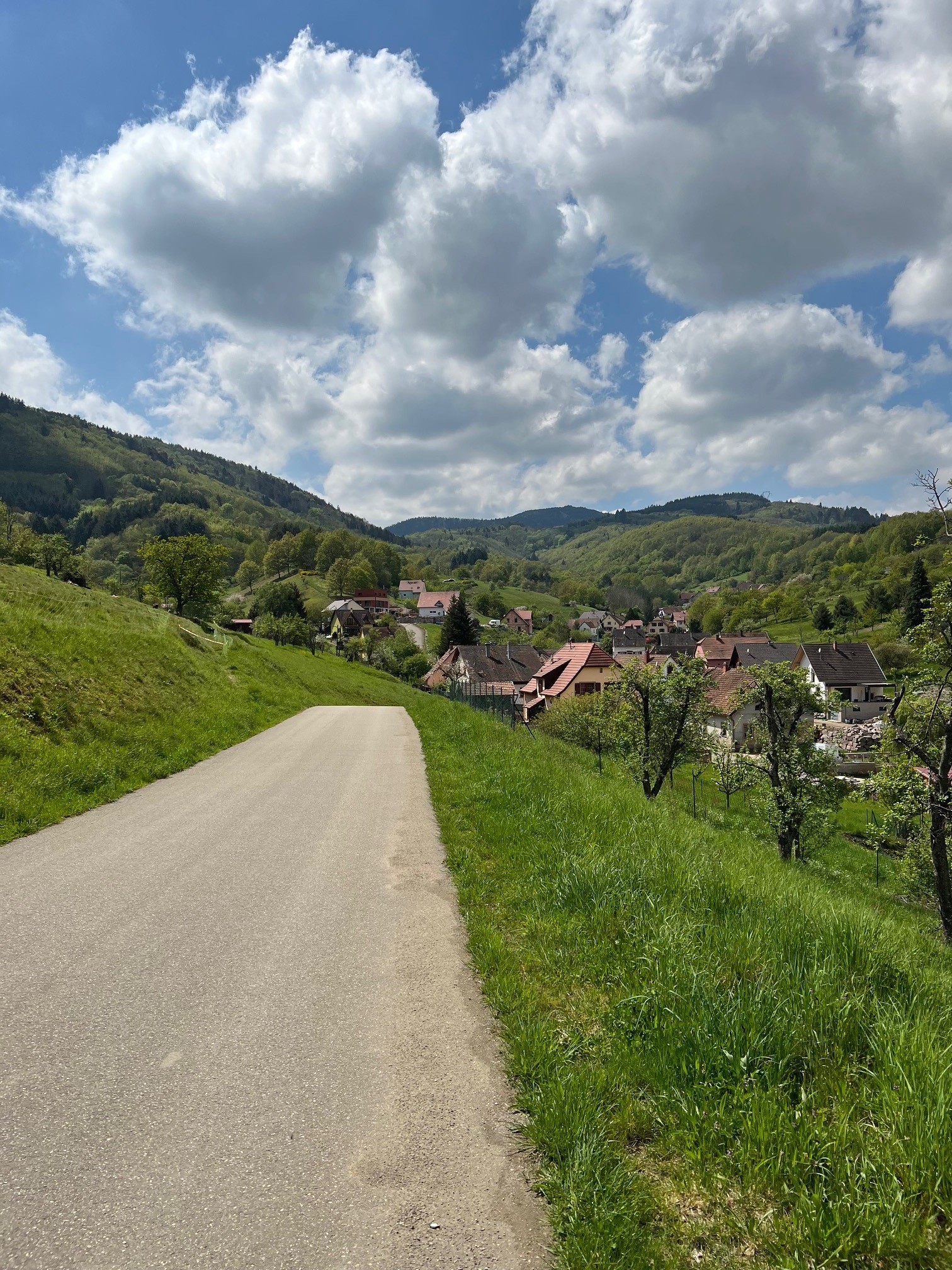
Saint-Martin, known as Samarte in Alsatian, has retained the name of its ecclesiastical patron saint throughout its history. The first mention of the parish dates back to a deed of gift to Honcourt in 1061, which places the parish "on the very spot," that is, in the immediate vicinity of the abbey. Subsequently, the name Saint-Martin appears in several historical documents: in the Habsburg land register (1303), as Saint Martini (1371), and as S. Martini vallis Alberti (1390), then as Saint-Martin in valle Weileriana in 1666.
The inhabitants and their nicknames
The inhabitants of Saint-Martin have interesting nicknames, such as Pfrimmerschiffler (broom pods) or Garteschisser (garden shitters). They are also known as d'Stoepper (slipper furriers).
Saint-Maurice
Saint-Maurice, known as Sankt Moritz in German and Sàmmeritz in Alsatian, has two main spellings. The Germanic name Sankt Moritz appears in medieval documents, although the oldest are forgeries; after 1200, all documents are authentic. Simultaneously, the French name emerged after the Thirty Years' War, notably on the Cassini map, along with a Franco-Germanic blend with Sankt Maurice in 1690. The place name underwent further Germanization during the periods of annexation (1871-1918 and 1940-1944).
The village is dedicated to a 3rd-century Roman officer, martyred under Emperor Maximian in Valais. The cult of Saint Maurice developed during the Middle Ages, and around sixty towns in France bear his name, but only one village in Alsace.
The inhabitants and their nickname
The inhabitants of Saint-Maurice are nicknamed Beeraschnitzer, meaning "pear cutters." Furthermore, the village is sometimes referred to as Klein Baris (Little Paris), possibly in reference to the many young women who emigrated to the capital in the 19th century to work. This phenomenon is also observed in Steige, highlighting the historical ties between these two communities.
Saint-Pierre-Bois
Saint-Pierre-Bois, known as Sankt Petersholtz in German and Peterschultz in Alsatian, is first mentioned in 1269 as "Villa Sante Petersholtz." Subsequently, the village appears under various spellings, such as "ze Sant Petersholz" in 1303 in the Habsburger Urbar, and in 1371 as "sancti Petri in Silva" then "sancti Petrus in Silva" in an episcopal tax register. In 1480, a charter from Moyenmoutier refers to the village as "cuira de Petersholtzen in Valle Villers."
After the Treaties of Westphalia (1648), the name evolved to Saint-Pierre-aux-Bois, then Saint-Pierre-Bois, which is simply a translation of the Germanic toponym Sankt Petersholtz. Located in a region that was originally wooded, at the foot of the Ungersberg mountain, the locality was likely originally a clearing in the middle of the forest. According to oral tradition, the name comes from an old monastery that was established on the site of the present-day church.
The inhabitants and their nicknames
The inhabitants of Saint-Pierre-Bois are called Ruppeschisser, meaning "caterpillar shitters" (i.e., butterflies).
Hohwarth
The name Hohwarth has changed little over the centuries, appearing in forms such as Hohwarth and Hoherwart. This toponym could be translated as "watchtower," but the question arises: what was being watched over? Perhaps the entrance to the Villé valley when arriving from Blienschwiller? This hypothesis, although speculative, suggests that there may have once been a village located at a higher altitude, destroyed as a result of wars.