Every spring, Easter arrives in Alsace with its colours, its flavours and above all its unique traditions.
A festival between religion and renewal
Originally, Easter is a major Christian festival that celebrates the resurrection of Jesus Christ, a symbol of the passage from death to life. It is part of the Holy Week cycle, marked in particular by Good Friday, the day of the crucifixion.
In Alsace and Moselle, this day has a unique characteristic: it is a public holiday, unlike in the rest of France. Inherited from local law and the region's Germanic history, this distinctive feature testifies to a cultural and religious heritage that remains very much alive.
But Easter also draws its roots from older traditions, linked to spring, nature and renewal.
A date that changes every year
Easter is celebrated on the Sunday following the first full moon after the spring equinox. It can therefore take place between March 22nd and April 25th.
The Zuckerhaas: the ancestor of the chocolate bunny
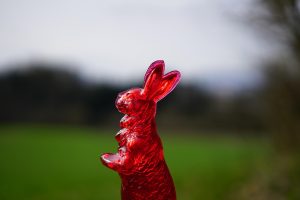
Long before the appearance of the famous chocolate bunnies, another treat delighted children in Alsace: the Zuckerhaas, literally "sugar bunny".
Originating from Germanic traditions, this little hare was made from cooked sugar, often colored and molded into translucent shapes. It was then placed in Easter nests.
Today, this specialty has become rare, largely replaced by chocolate, but it remains a precious testament to the traditions of yesteryear.
In Alsace, it is the rabbit that brings the eggs
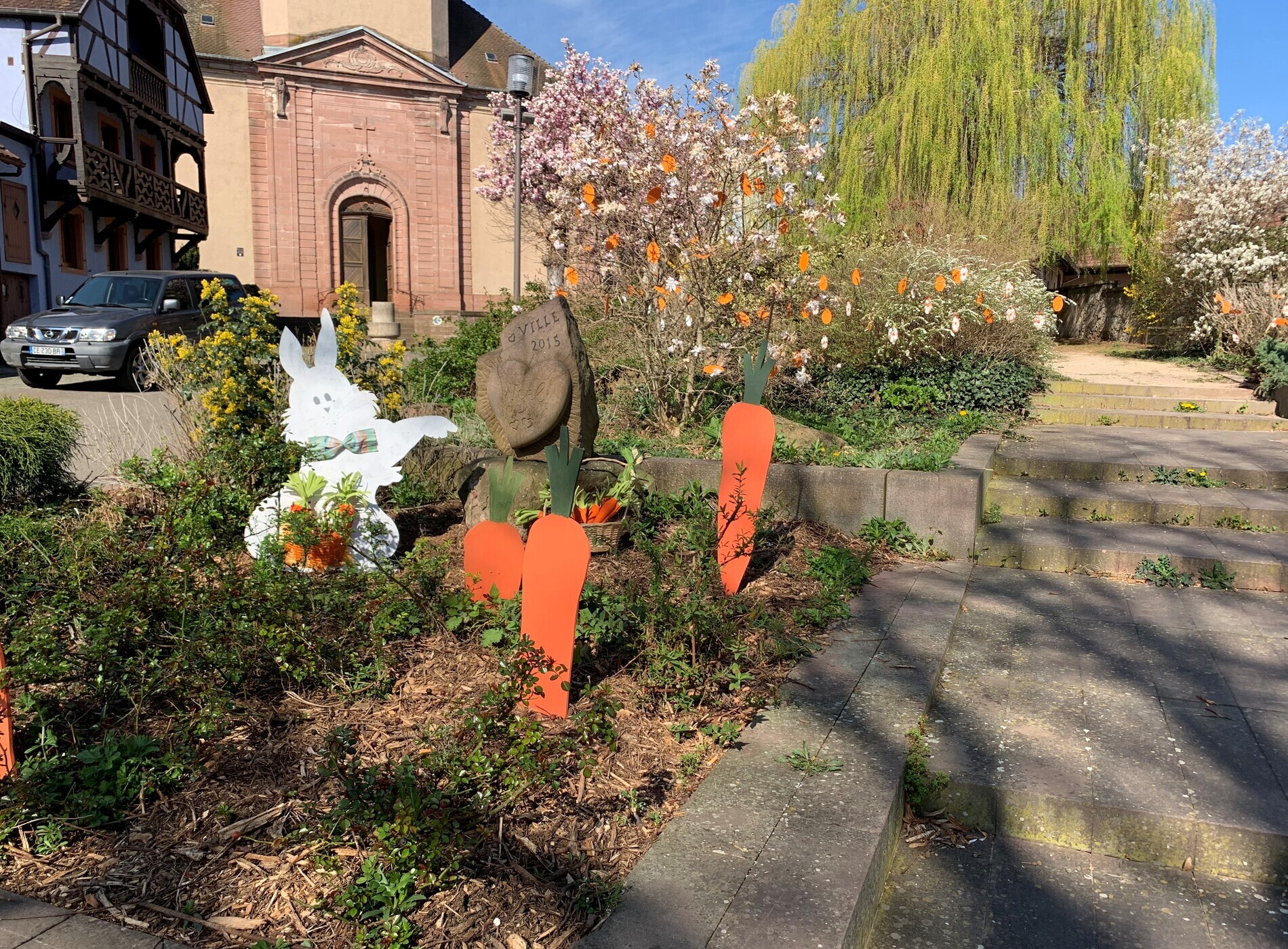
Unlike other regions, it is not the bells that bring the eggs in Alsace, but the Osterhaas, the Easter hare.
A symbol of fertility and renewal, it announces the arrival of spring and recalls the pagan origins of this festival.
Silent bells… replaced by rattles
Between Maundy Thursday and Easter Sunday, church bells cease to ring as a sign of mourning.
In the past, they were replaced by rattles, used by children in the villages. These wooden instruments produced a characteristic noise that punctuated the days and called for prayer.
The Easter tree: a colorful tradition
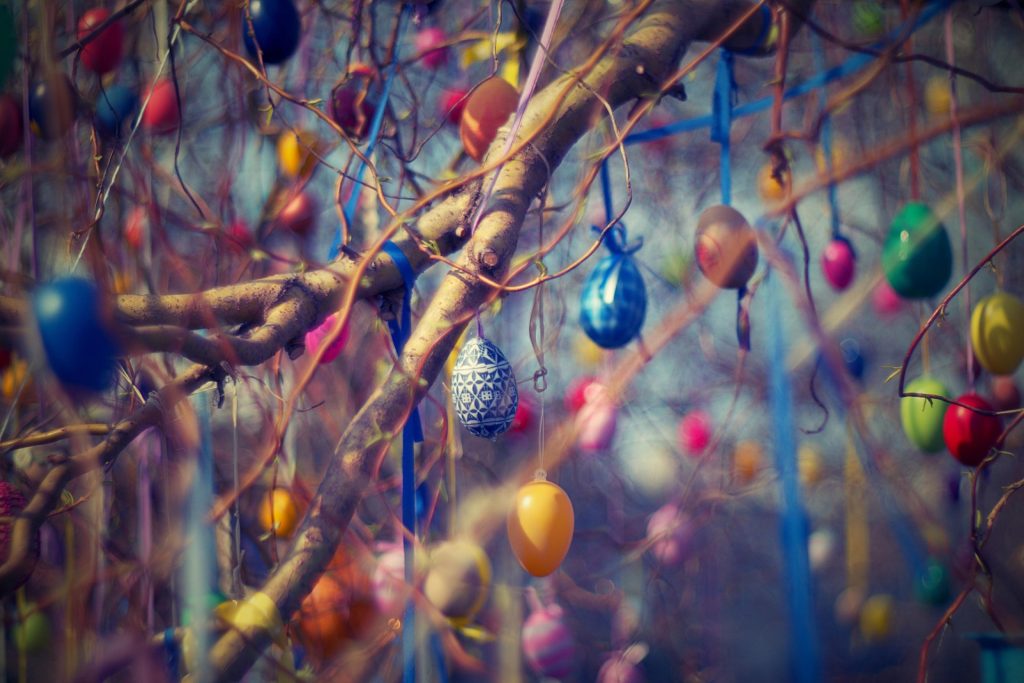
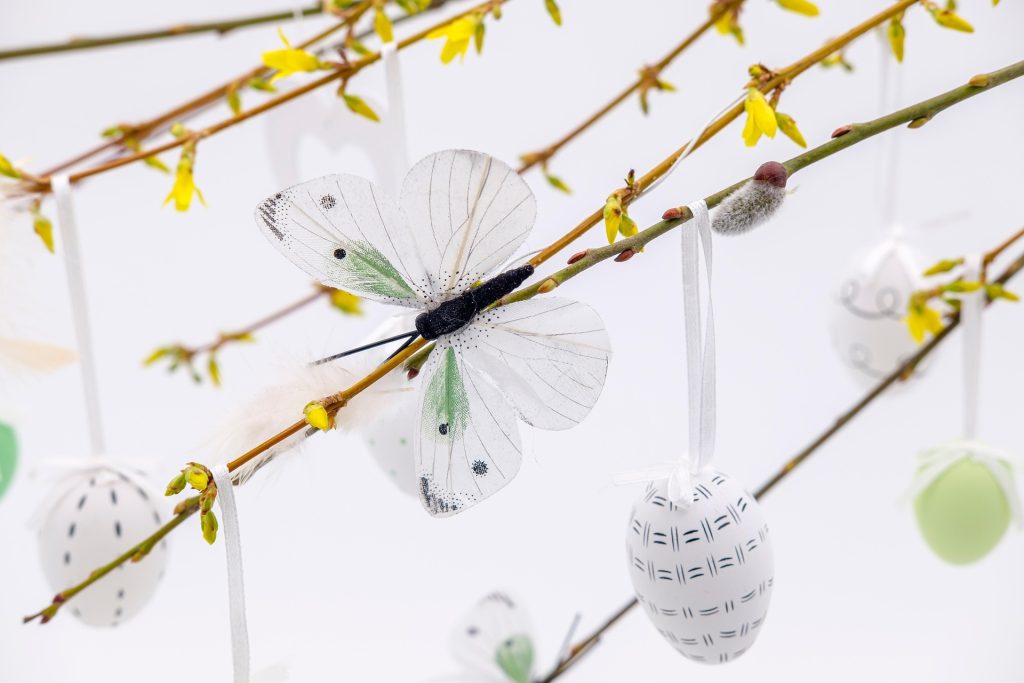
The Easter tree is an essential tradition in Alsace.
Made from willow, hazel or forsythia branches, it is decorated with emptied and hand-painted eggs. These eggs symbolize life, fertility and rebirth.
In the past, they were colored using natural dyes, such as onion skins, red cabbage, or certain plants. Even today, these decorative trees can be found both inside homes and in gardens and villages, contributing to the springtime atmosphere.
The Oschterputz: the big spring cleaning
Before celebrating Easter, Alsatians perpetuate the tradition of Oschterputz, the great spring cleaning.
This involves cleaning, sorting, and airing out homes to welcome the new season into a healthy environment. Beyond the practical aspect, this ritual has a symbolic dimension: it marks renewal and the transition to a new period.
The Lammele: the essential gourmet treat
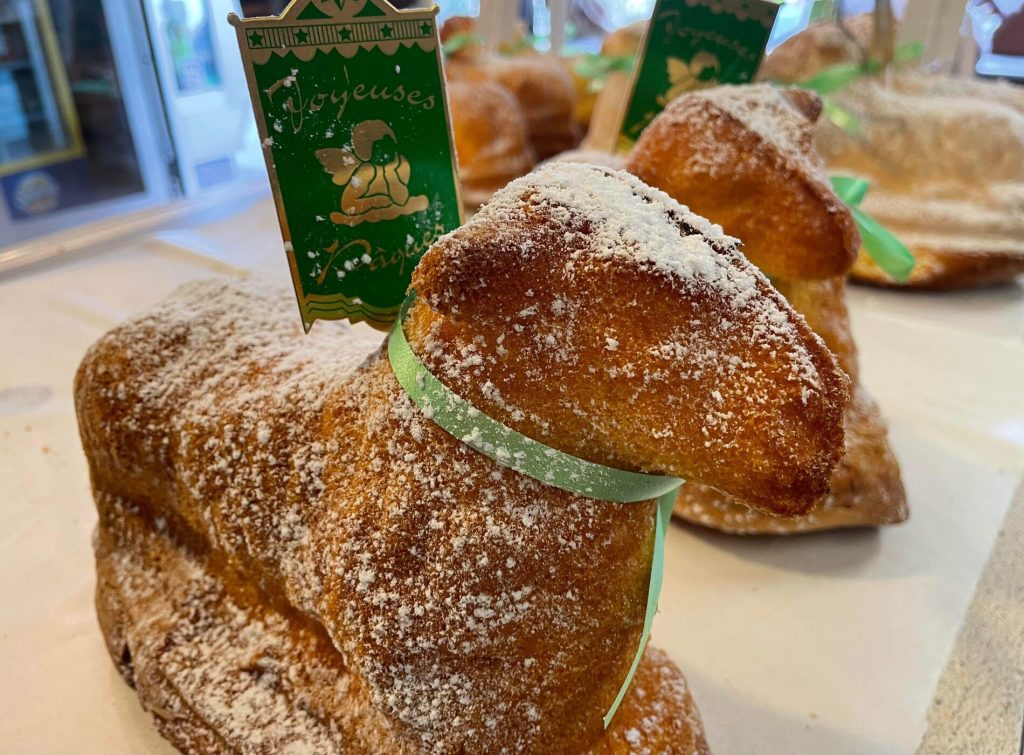
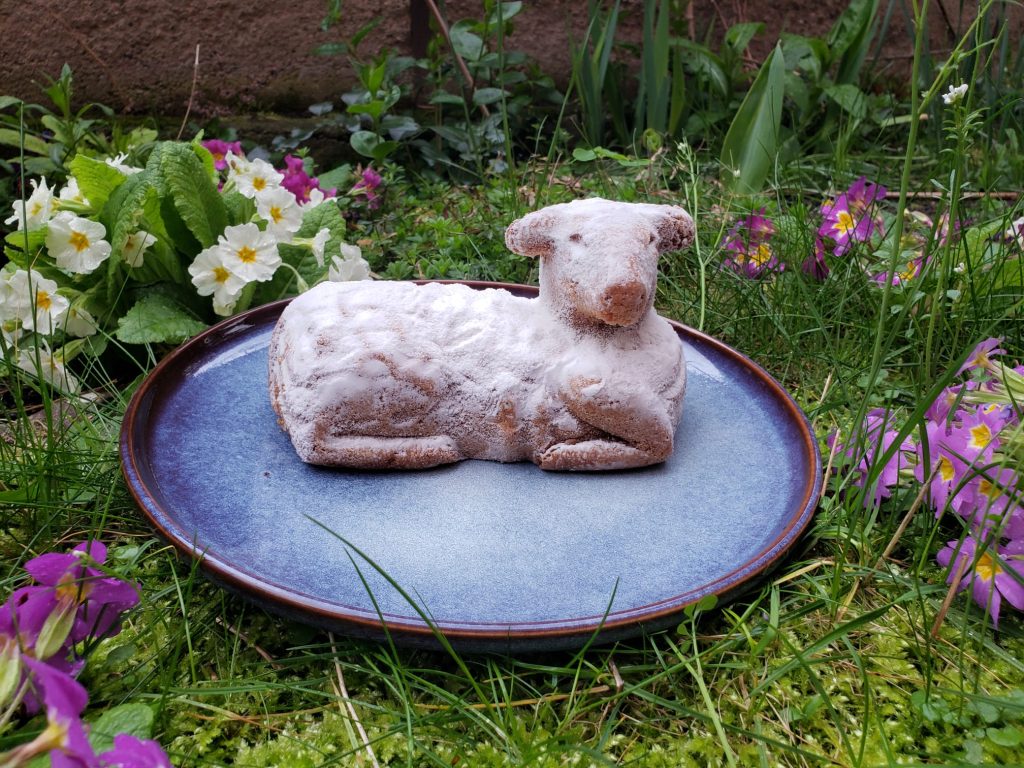
The Lammele, a small cake in the shape of a lamb sprinkled with icing sugar, is an iconic Easter specialty in Alsace.
A symbol of Christ, it is traditionally eaten on Easter morning. This recipe used to be a way to use up the many eggs accumulated during Lent.
Today, it remains an essential element of Easter tables.
A tradition that is still very much alive
Even today, these customs shape the rhythm of life in Alsatian villages. Decorations, markets, and Easter egg hunts testify to the vitality of these traditions.