
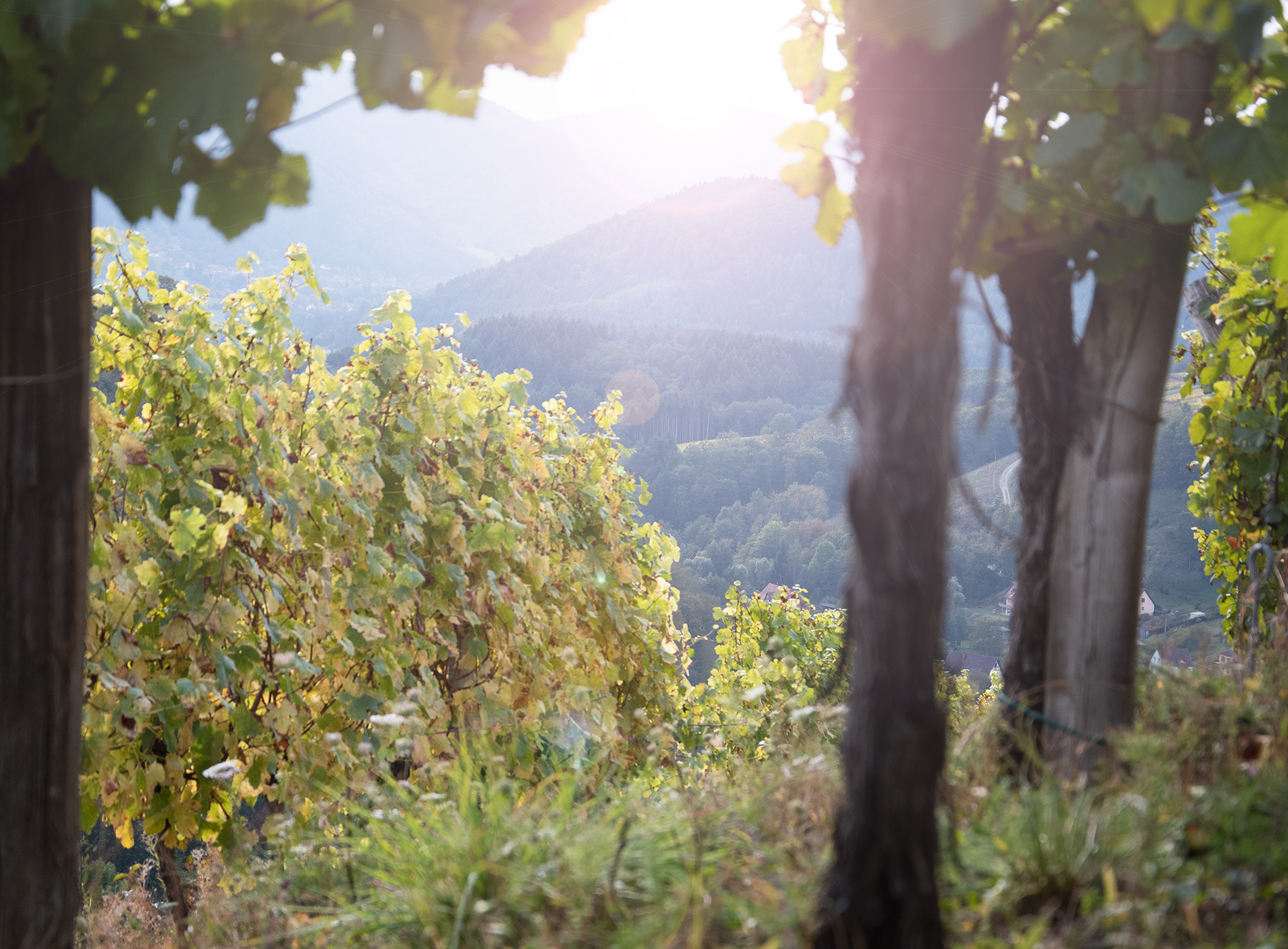
It is not uncommon to hear this phrase of astonishment at the tourist office.
For many visitors, Alsatian wines are mainly found on the wine route, at the foot of the hills, between the mountains and the Alsatian plain.
This idea is undeniable, as it's true that a vast majority of the vineyards and wineries are located along this route through our region. It's well known that exceptional things are worth the effort!
However, in a pretty little valley in central Alsace, there is a village that boasts not one, not two, but three winegrowers. This village, which everyone should know to complete their knowledge of Alsatian viticulture, is the village of Albé.
As you might have guessed, Albé is located in the Villé Valley, west of Sélestat and between Alsace and Vosges on a special land, the only mountain vineyard in Alsace and conducive to the cultivation of vines.
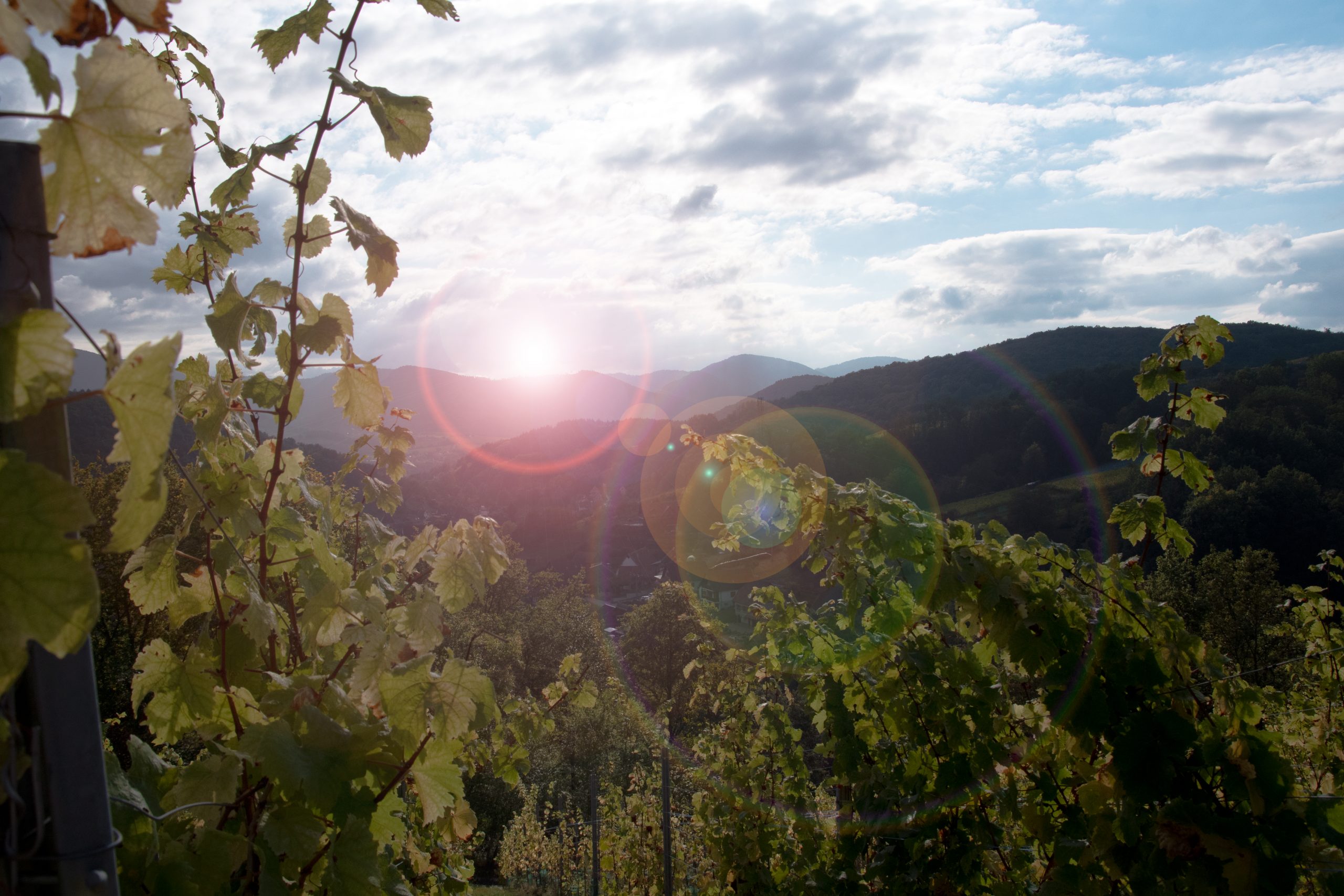
Let's start at the beginning with a brief overview of the history of viticulture in the Villé valley.
The vineyard has shrunk considerably since the end of the 19th century.(entering XNUMXth grade) century when at that time viticulture represented one of the essential incomes of the Villé Valley.
In 1886, there were 682 hectares of vineyards, while by 1989, the area planted with vines had fallen to just 13 hectares. In reality, only a few plots remained planted for personal consumption in the municipalities of Steige, Maisonsgoutte, Triembach, Saint-Pierre-Bois, and Neuve-Eglise. Some of these plots still exist today, still producing wine for family consumption.
But that was before!
Today, a bombshell in the history of viticulture in the Valley with a growing wine estate comprising, as you read before, three winegrowers cultivating the Albege lands.
In order of arrival, Domaine Christian Barthel, Domaine Thomas K (K for Klein) and the last one, Domaine Moritz-Prado.
Together, the three of them cultivate 24 hectares of vines on schistous, mountainous soil. (Schist is a rock characterized by its layered appearance and its tendency to split into thin plates or "rock sheets." It is said to exhibit schistosity. It can be a clayey sedimentary rock or a metamorphic rock. - source Wikipedia)
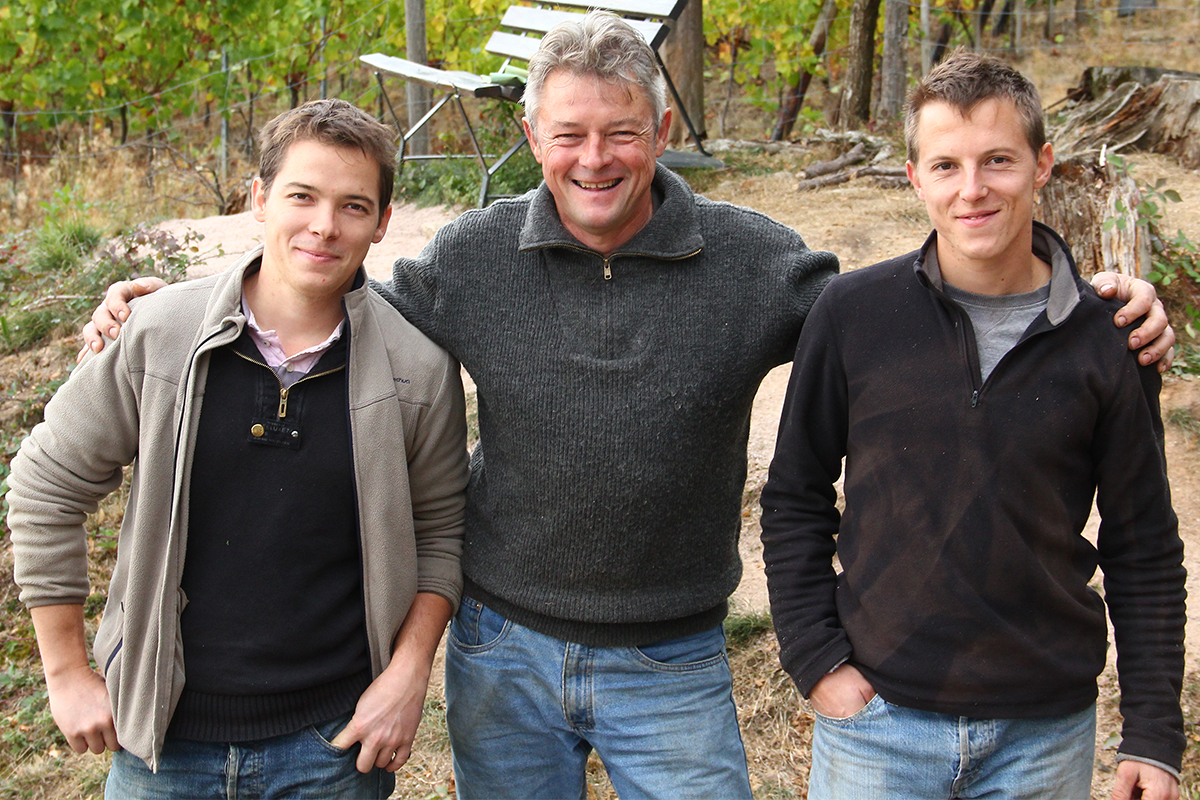
Le Christian Barthel Estate was founded in 1997 and is a family business spanning three generations.
Today run by Christian and his two sons, Michel and Clément, but also by the rest of the family, the estate works 10 hectares of vines.
The revitalization began in 2009 when Michel and Clément took over the estate. Since then, some excellent wines have come out of the Barthel family cellar. If we had to choose just one, it would certainly be the Pinot Noir Cuvé René.
Winegrowers would say something like this about this wine:
"After being aged for 12 months in barrels, unfiltered and with minimal sulfites, this wine allows its natural character to shine through. With an open and generous nose, it offers notes of incense and toasted dried fruit. On the palate, it is full and pleasant with a lovely touch of tannin."
A tourist advisor will tell you: "The René vintage? ... Wow, it's good!"
Let's change domains, travel the 900-odd meters that separate Domaine Barthel from Domaine Thomas K and discover the wines of the young winemaker who gave his name to his products.
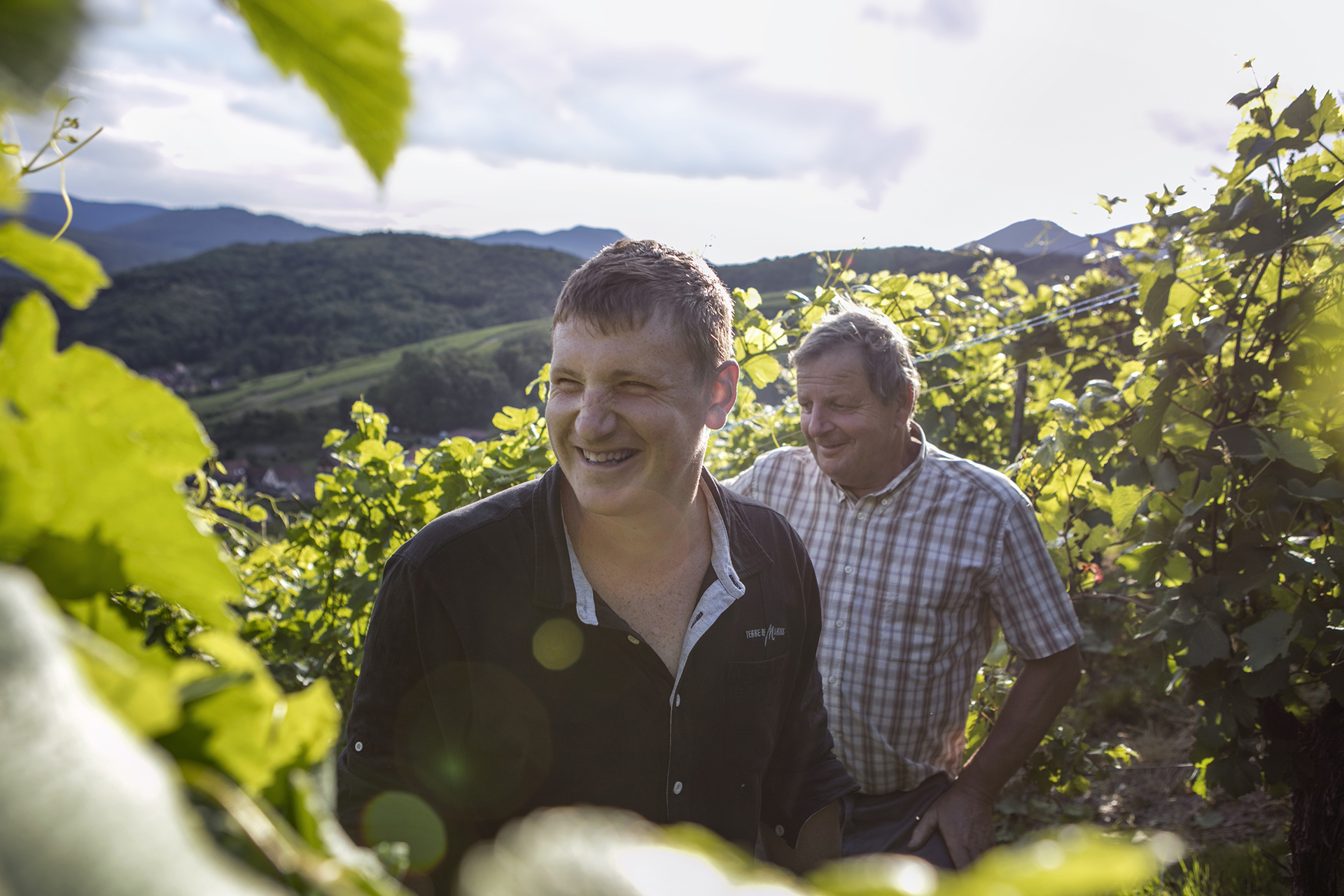
Le Thomas K Estate It was established in 2015 and brought the whole family together around a shared passion: winemaking. This young 9-hectare estate is the result of the work of Thomas and his father.
Full of ideas, dynamism and enthusiasm, Thomas runs from the vineyards to the cellar and offers wines labeled as being produced using "high environmental value" agriculture.
Basically, Thomas loves nature and he protects it!
If we had to choose just one wine from the Klein family, it would certainly be the Pinot Noir Terre de Schiste 2016.
Winegrowers would say something like this about this wine:
"It is pleasant, straightforward, and elegant with an intense red hue. This Pinot Noir is characterized by notes of overripe sour cherry on the nose, and on the palate... it is the undergrowth and schist minerality that emerge around the tannins, which will be smoothed throughout its aging."
A tourist advisor will tell you: "The 2016 Pinot Noir Terre de Schiste? ... Wow, it's good!"
Now for the youngest.

Le Domaine Moritz-Prado is the result of the work of Ghislain (Moritz) and Angela (Prado) who embarked on the adventure of Albege viticulture in 2018.
At the helm of 5 hectares of vines, the young couple produces fine wines in a truly unique way, as the Moritz family, like the Prado family, represents the first generation of winemakers. This newness hasn't detracted from the estate's highly successful results and its European and even global reputation, as their wine is exported to Belgium, Romania, England, and Colombia, Angela's country of origin.
If we had to choose just one bottle from the different wines offered by the winemaking couple, it would undoubtedly be their Pinot Gris AOC Terroir de Roche 2018.
Winegrowers would say of this wine… something like…:
"It displays a pale yellow color with greenish highlights. This Pinot Gris reveals floral and fruity notes such as peach and yellow apple. Its crisp acidity gives it a lovely freshness and makes it very drinkable."
A tourist advisor will tell you: "The Pinot Gris AOC Terroir de Roche? ... Wow, it's so good!"
Thanks to their terroir, thanks to this land filled with schist which gives the wine its character, the winegrowers of Albege will be happy to introduce you to their products.
Don't hesitate to visit them and ask us for advice, without a doubt we will tell you that their wine has flavors of…uh…well, that it is good!