
New article in this series which aims to introduce you to, or perhaps represent you to, the producers and farmers located in the Villé Valley.
Today, we're heading to the Col de Fouchy to meet Christine and Olivier.
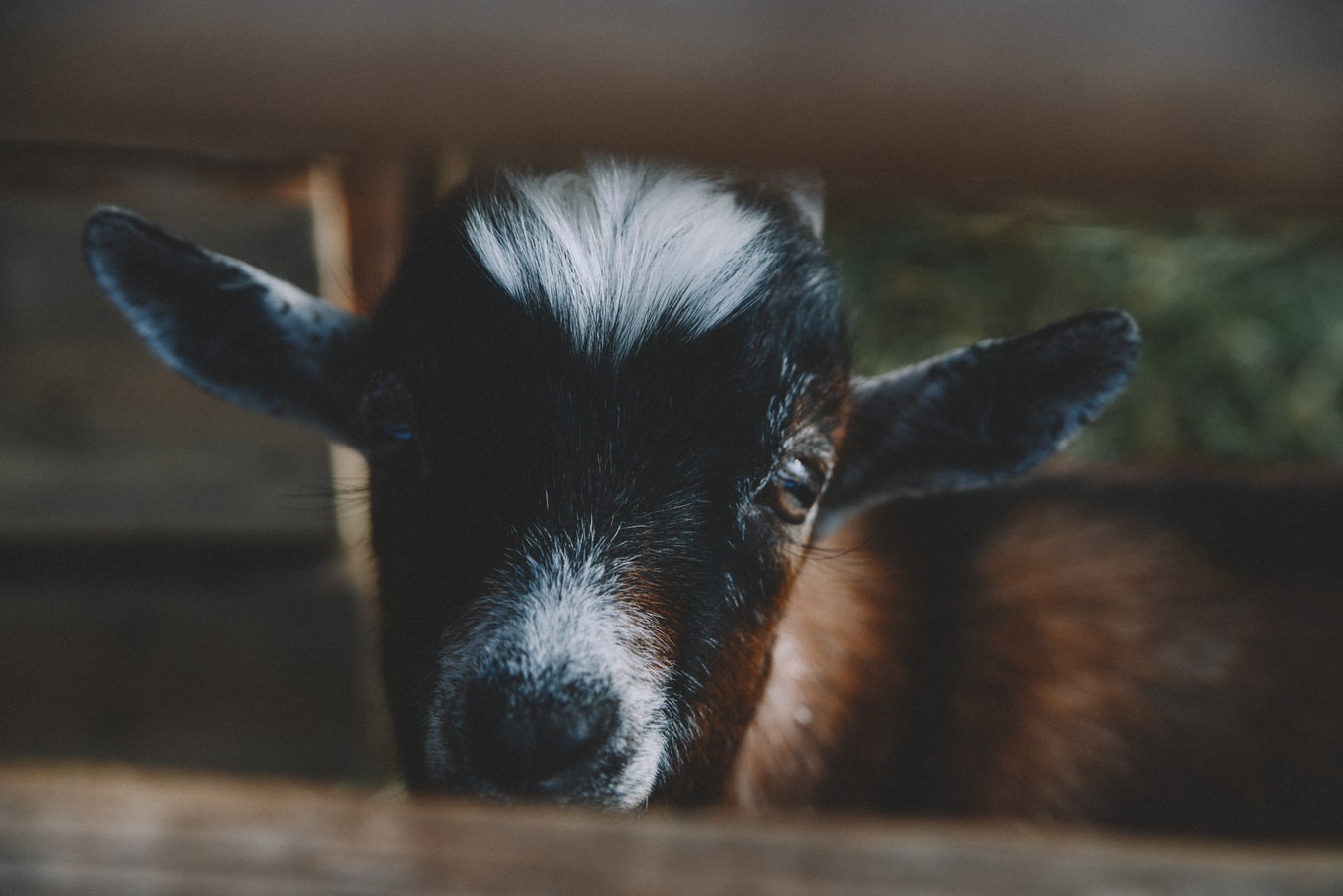
Their farm, Papilotte Farm, is a goat farm consisting of… goats.
But there are not only goats here…cows, pigs, dogs, … everyone lives here in a harmonious atmosphere close to the values of the land.
Here we can truly speak of a love for the land and animals. Olivier is a hard worker who likes things done well and doesn't hesitate to roll up his sleeves…oh yes, and he loves his goats!
Christine is the specialist in processing, yogurts, cheeses, nothing resists her… oh yes, and she loves her goats!
Let's ask them a few questions to get to know them better and understand their vision of agriculture and life in general.

-Hello Christine, hello Olivier.
Can you introduce yourself in a few words?
I'm originally from the Ried region. After some less-than-convincing studies in accounting, I changed direction by pursuing a vocational baccalaureate in horticultural production through distance learning, while working with Olivier, who owned an electrical installation company. Olivier is from the Strasbourg area.
We don't have any agricultural training in goat farming; goats came into our lives somewhat by chance, a happy accident, as they say. We learned everything on our own, and we're still learning every day.
We worked alongside the farm for a long time; we each had our own jobs. But one day, the work here became more demanding, and it was difficult to be everywhere at once. So, we definitively left our respective jobs to focus on the farm.
-The question that many people ask is where the name of your farm, Papilotte Farm, comes from?
Ah, Papilotte, spelled with one "L" and two "T"s, but pronounced Papillotte. It's the name of a kid goat born in 2016. At birth, a kid goat usually stands up within 30 minutes for its first feeding. Papilotte took a week to walk after a lot of effort and support from us. Her mother passed away a few days later, leaving us Papilotte and her sister Lexie. Papilotte left us at the age of three months. We were devastated, and Olivier suggested honoring her by naming our farm after her.
-You have chosen to develop a farm producing products from goat's milk.
Why choose goats?
Simply because in 2013, we arrived in the valley with our two goats and one billy goat. We'd gotten them to clear our land, and you know, male plus female makes babies! We dreamed of a more agricultural, greener, more organic life. We moved in with chickens, ducks, and a pair of geese. We dreamed of self-sufficiency, so why not make cheese? We ate it, we gave it away, and then we sold it from time to time. Then one thing led to another, we never had enough milk, so we gradually increased the herd. If we'd gotten sheep from the start, we might have a sheep farm, who knows!
-How many animals are there here -goats-cows-dogs- … and all the others:
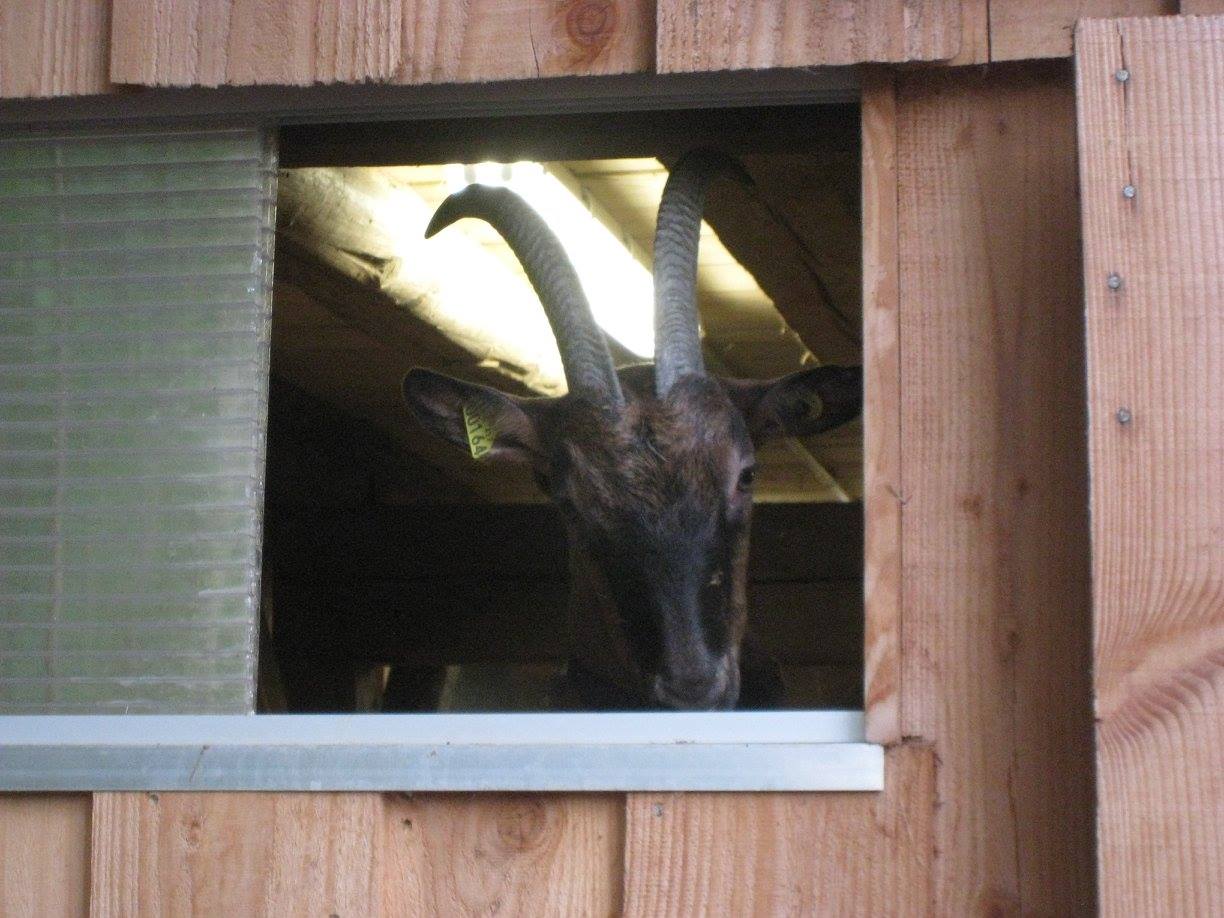
There are two cows, Brioche and Lucia, about fifteen sheep, chickens, ducks, and a goose. We also have four cats and one dog. A pair of pigs and their offspring that we raise for meat. And the goats… about sixty of them. We've far exceeded 100 head of livestock, and many more if we count the bees that Olivier keeps for the delicious honey of the valley!
-What products do you offer for sale?
Cheese, of course, yogurt, caramel and chocolate creams. Warm goat cheese, seasonal samosas (right now they're wild garlic), I sometimes make ice cream but it always ends up in our stomachs, and Olivier makes honey candies, especially in winter.
In fact, we only offer products that we eat!
-Do you process everything on site?
Everything is transformed here.
-What is your vision of agriculture? Can we speak of a particular form of livestock farming or cultivation in your country?
For us, agriculture is about the relationship between animal and plant species; everything is connected. One cannot exist without the other. We don't aim for intensive farming, but for quality. We respect the land and, above all, our animals. We encourage longer lactation periods whenever possible, so we don't have too many kids each year. We try to place the kids alive, but sometimes it's impossible, and above all, we don't send our retired goats to the slaughterhouse. They spend their final days here, or we entrust them to kind people.
I think it's not all about money; you have to learn to give in order to receive.
Organic or not organic?
Organic, of course; conventional farming is to be banned. Besides, we shouldn't have to pay for organic certification; it's conventional agriculture that should be wearing a label... for denunciation (humor).
-During the crisis we are going through, how can our readers buy your products?
Do they have to come and collect them at the farm or do you work with sales outlets?
We are on a tour and our products can be purchased at Ferme et Cie and Locavor.
-To conclude this short interview, I propose a short Chinese portrait to introduce you to our readers.
1-If you were an animal you would be: We would all be cats, we wouldn't lift a finger all day, only getting up to eat, it would be a change for us.
2- If you were a year, you would be: So, what's this all about?????? A year where things were less chaotic
3- If you were a tree, you would be: A huge one that provides plenty of shade to rest under!
4- If you were a song, you would be: For Olivier, 1983 by Jimi Hendrix, and for me, Snow by the Red Hot Chili Peppers.
5- If you were a hashtag – or a motto – you would be: Everything comes to those who wait, and help yourself and heaven will help you, and maybe you'll live your life, not your dreams!
6-If you were a man you would be
If you were a woman you would be
We would simply be ourselves!
7- If you were a wish, you would be:
There are too many wishes. !!!!
Thank you both very much.
We wish you the best possible continuation in this complicated context.