
For over a century, the sounds of looms and machines accompanied life in the Villé Valley. Before the large factories, textiles were made in homes. Then, workshops and spinning mills gradually transformed the villages and made the textile industry one of the main drivers of the local economy. A look back at an industrial history that profoundly marked the valley and several generations of its inhabitants.
From the family loom to the first workshops
To understand the industrial history of the Villé Valley, we must go back to the 19th century, to a time when we did not yet speak of large factories.
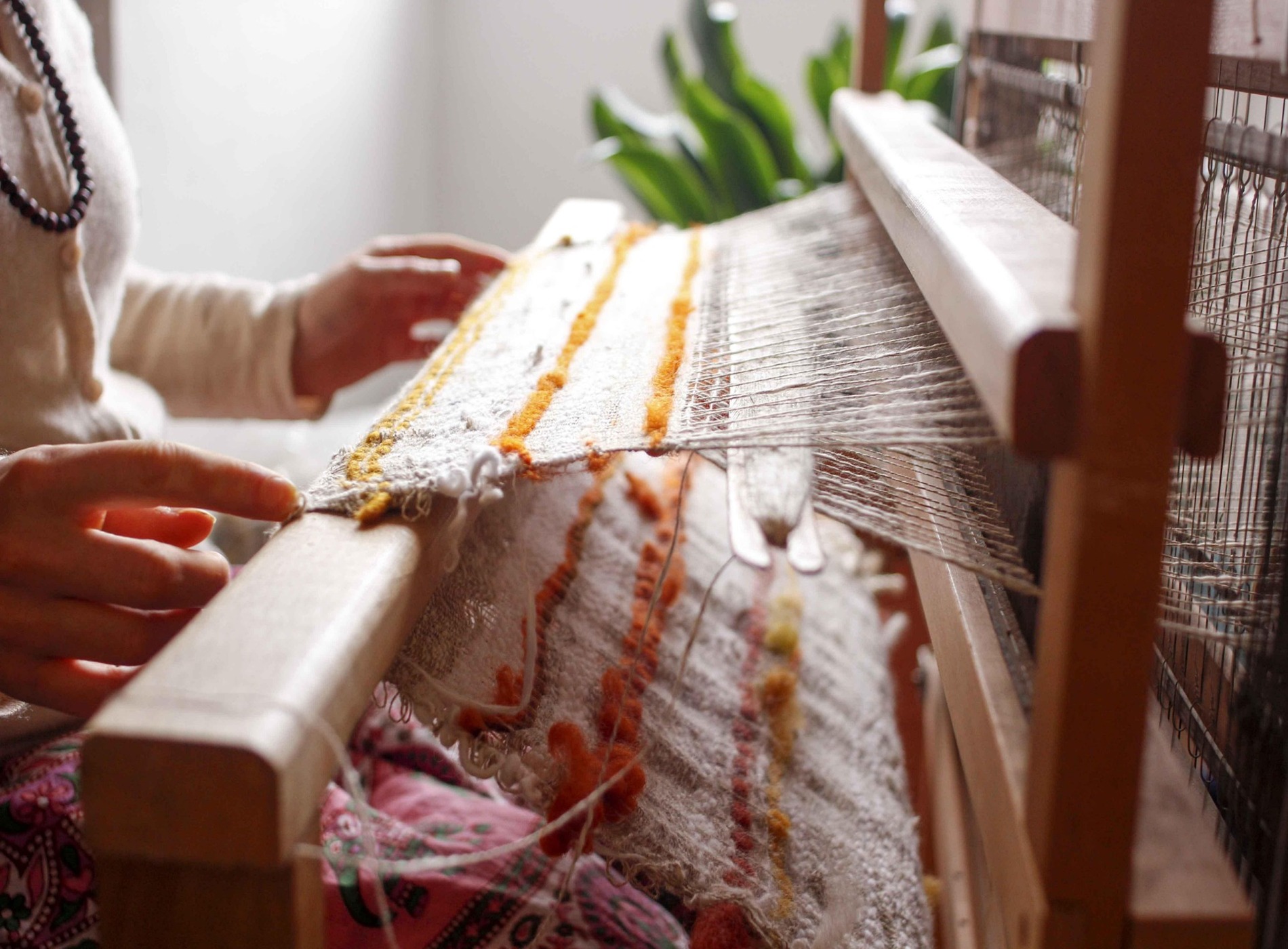
Textiles are already part of the daily lives of many families. In homes, a loom is set up and people work for manufacturers, particularly those from Sainte-Marie-aux-Mines, a major textile center in the region.
Weaving then represented an important supplementary income for rural families. People worked at home, often alongside other agricultural activities. The fabric produced in the valley then had to be transported to neighboring valleys to be dyed, sometimes on foot.
Textiles are not limited to weaving. Other activities include bleaching fabrics, hosiery, stocking making, and slipper lining.
This activity was then deeply rooted in daily life. In Villé, Joseph Guntz, nicknamed "Geis", is considered the last home weaver.
But this organization will gradually disappear.
With mechanization, industrial machines made it possible to produce more and faster. Work done in homes became less profitable, and manufacturers gradually reduced their orders from weavers.
For the inhabitants, the change is significant: textiles, which until then had been a supplement to agricultural work, will gradually become salaried work carried out in workshops and then in factories.
The villages are entering the industrial age
From the mid-19th century onwards, workshops bringing together several trades appeared in different villages of the valley.
The principle is simple: rather than working from home, the workers are housed in the same building. The equipment, heating, and lighting are grouped together in one place, allowing for better production organization.
Steige became an important textile center. Several spinning mills, weaving mills and factories developed there, particularly in the Chênesire and Gasse sectors.
In 1840, a weaving factory linked to the Koenig company was established on the banks of the Giessen. A few years later, another company, Blech, also originating from Sainte-Marie-aux-Mines, opened a workshop on rue des Vosges, on the banks of the Giessen diversion canal.
This building takes the name "Raspelhus", in reference to the noise produced by the shuttles of the looms.
Other municipalities are also affected: Breitenbach, Maisonsgoutte, Triembach-au-Val, Villé and the Saint-Maurice and Thanvillé area are seeing the emergence of their own workshops or factories.
The Villé Valley did not become industrial overnight. Industrialization was built gradually, village by village.
1906: Villé changes its appearance
The real turning point came at the beginning of the 20th century.
In 1906, the first cotton textile factory opened in Villé, near the train station. Its location was not insignificant: the railway facilitated the arrival of raw materials and the shipment of finished products.
The following year, in 1907, a second factory, the Marchal spinning mill, was established between Villé and Bassemberg. It would become the headquarters of the future Villé Spinning and Weaving Mills group.
The Villé Spinning and Weaving Mills, more often referred to by their initials FTV, gradually became one of the main players in the valley's textile industry. The group combined spinning activities, which transformed fibers into yarn, and weaving, which then used these yarns to manufacture fabrics.
From this period onwards, the textile industry changed scale.
Small factories are no longer isolated. Several establishments are gradually being grouped together or placed under the control of the same industrial complex.
FTVs: an industry on a valley scale
Contrary to what its name might suggest, the Filatures et Tissages de Villé (FTV) is not a single factory located in Villé.
The group constitutes a veritable industrial network spread across several municipalities.
At its peak, it had eight factories, including two in Villé, and relied on establishments located in Fouchy, Breitenbach, Maisonsgoutte, Steige, Colroy and Lubine.
Two other establishments, in Barembach and Thanvillé, also maintain privileged links with the group.
The Villé Valley thus became a true textile territory. The factories integrated themselves into the villages and gradually transformed the landscape.
Their architecture is easily recognizable. The buildings are designed primarily for functionality, and some feature the famous sawtooth " shed" roofs. These roofs allow more natural light into the workshops.
Inside, the machines occupy a central place. Outside, the chimneys, industrial buildings and workers' walkways contrast with the rural landscape that dominated just a few decades earlier.
"At 14, you'll be working in a factory."
With the development of FTV, textiles gradually became one of the main employers in the valley.
For many families, working in a factory becomes almost a given. An expression in Alsatian, reported in local accounts, perfectly sums up this reality:
“Sepele, met vierze Johr, guech ad Favrik schaffe”
"Little Joseph, at 14 years old, you're going to work in a factory."
The factory becomes an almost normal part of life for the young residents.
Men, women and young people work in the establishments. The workers come from neighboring towns and commute daily to reach their place of work.
Over time, the need for labor increased. FTV then turned to workers from elsewhere: Italians from 1926, then Spaniards, Portuguese and Turks from the 1970s.
Textiles thus transformed not only the economy, but also the society of the valley.
A factory that supports the lives of its workers
FTVs occupy such an important place in local life that they are not limited to employment.
The company is developing a genuine social policy.
A music society was founded in 1911, followed by a workers' cooperative in 1921. In 1925, a rest home was established in Fouchy, in what would become the Beau-Manoir. A bathhouse was then built in 1930 and a provident fund in 1936.
The company is also involved in housing. In 1956, FTV managed 96 buildings representing 158 dwellings.
This organization creates a true community around the factory. People work there, sometimes live there, meet up with colleagues there, and the company supports certain aspects of daily life.
This system, known as industrial paternalism, allows companies to retain their employees and meet some of their needs. But it also makes the valley highly dependent on its main sector of activity.
When an entire valley depends on textiles
For several decades, this dependence seemed to be a strength.
The factories provide work and regular income for many families. They allow a still largely rural population to access wage labor and contribute to the economic transformation of the valley.
But the textile industry remains subject to crises and competition.
The FTVs went through the 1929 crisis, the consequences of the Second World War, supply difficulties and market fluctuations.
After the war, however, activity remained significant. The workforce even continued to increase until the mid-1950s.
In 1955, the spinning mills employed 498 people and the weaving mill 175. The entire group then represented approximately 1,700 employees.
The valley then experienced the peak of its textile industry.
1956: The shock
Then everything changes.
The year 1956 marked a real turning point in the history of FTV.
Within a few months, the workforce collapsed. By August, only 32 people remained at the spinning mill and 2 at the weaving mill.
For a valley that depends heavily on this industry, the shock is considerable.
The FTV companies are seeking to adapt: modernization of equipment, reorganization of production, concentration of activities and reduction of staff.
But the textile world has changed.
Competition is intensifying, production costs are rising, and businesses must adapt their working methods. The golden age when factories employed thousands of people in the valley is over.
The creation of the SIVOM of the valley in 1964 contributed in particular to the search for new industrial sites and to the diversification of the local economy.
A long disappearance
After 1956, textiles did not disappear immediately.
Some activities continued and the factories remained for several decades. But the workforce gradually decreased and recruitment became more difficult.
Younger generations now have new career opportunities and are less likely to want to enter the textile industry.
The establishments close, change owners or purpose. Little by little, the noise of the machines becomes less frequent.
The history of FTV nevertheless continues until the end of the 20th century.
In 2002, under the direction of Roland Breg, the activity ceased definitively.
Nearly a century after the first major industrial settlements in Villé, a page is turning.
Factories that have left their mark
Today, looms are no longer part of everyday life in the valley. Yet, their history is far from having disappeared.
It is still visible in old industrial buildings, workers' housing, and certain village quarters. It is also found in the memories of residents whose parents, grandparents, or great-grandparents worked in the factories.
In Villé, the former FTV site still stands as a vast testament to this industrial history. Like many former industrial sites, the site is now undergoing renewed consideration regarding its redevelopment.
But preserving the memory of textiles does not just mean preserving walls.
It is also a reminder of a time when you could hear the machines from the villages, when factory schedules dictated the rhythm of the days and when several generations of the same family could work there.
A story that belongs to the whole valley
The textile history of the Villé Valley is ultimately not limited to a single factory or company.
It begins with a loom in a house, continues in the small workshops of the 19th century, then accelerates with the large spinning mills and weaving mills of the early 20th century.
With the FTV, textiles became a major industry that directly or indirectly affected many villages.
For decades, it provided jobs, transformed landscapes, and shaped society. Then its decline served as a stark reminder of how fragile an economy can be when it relies heavily on a single activity.
From the home weaver to the factory worker, from small workshops to large FTVs, textiles have accompanied more than a century of the history of the Villé Valley.
Today, some of the old factories have disappeared, others have changed their function. But behind these buildings still lies the memory of thousands of workers and of a time when, truly, textiles sustained the valley.